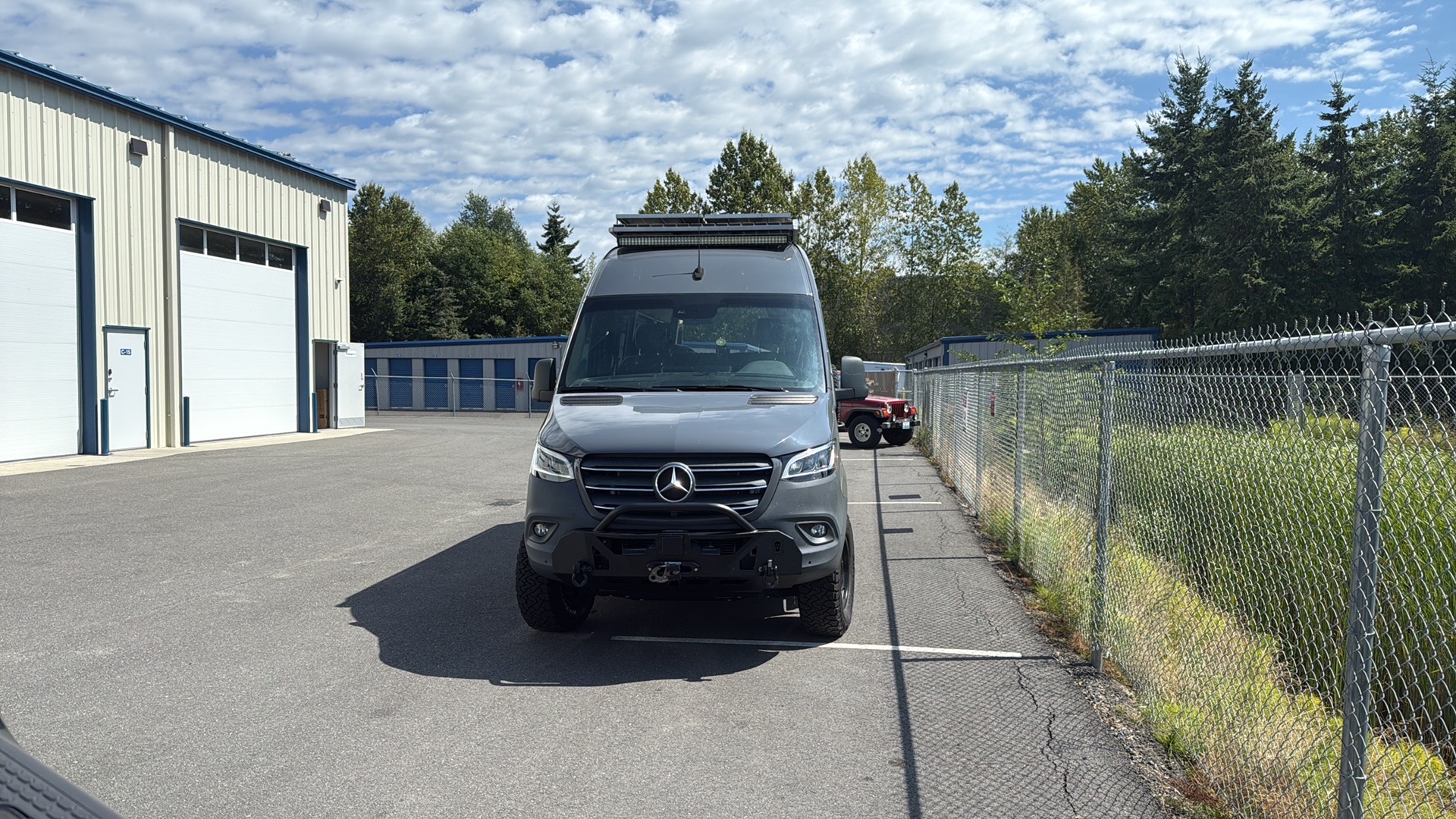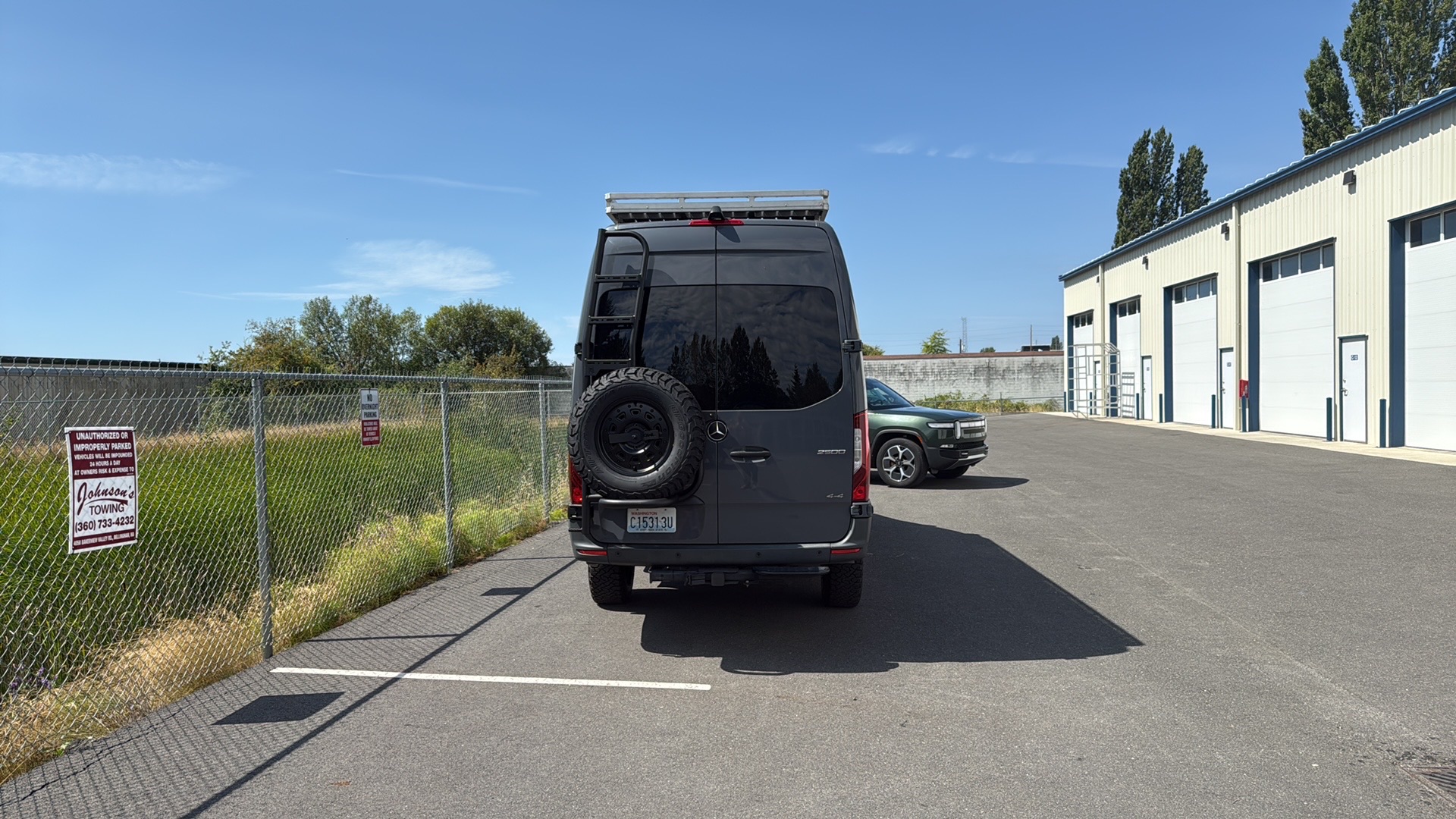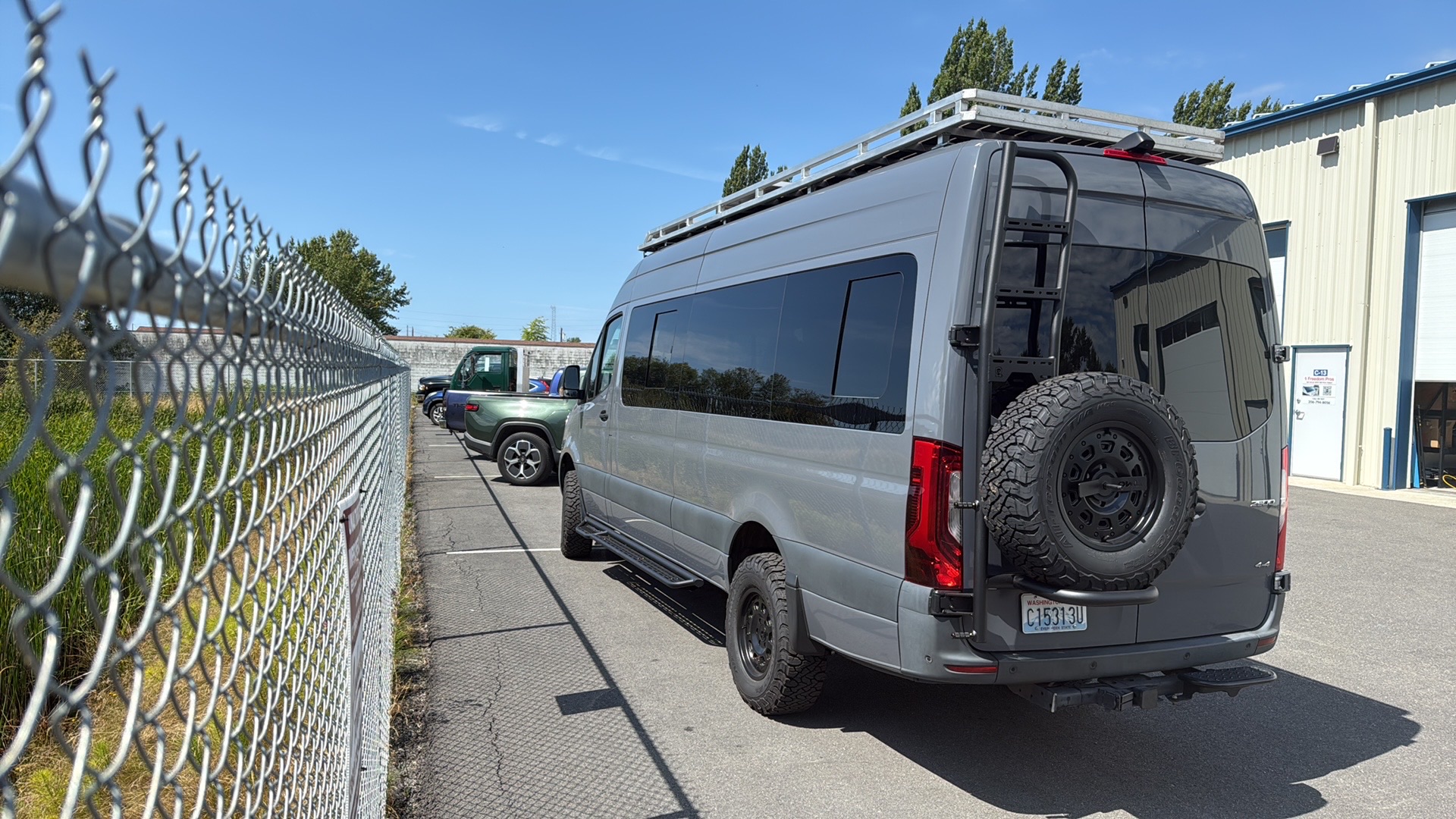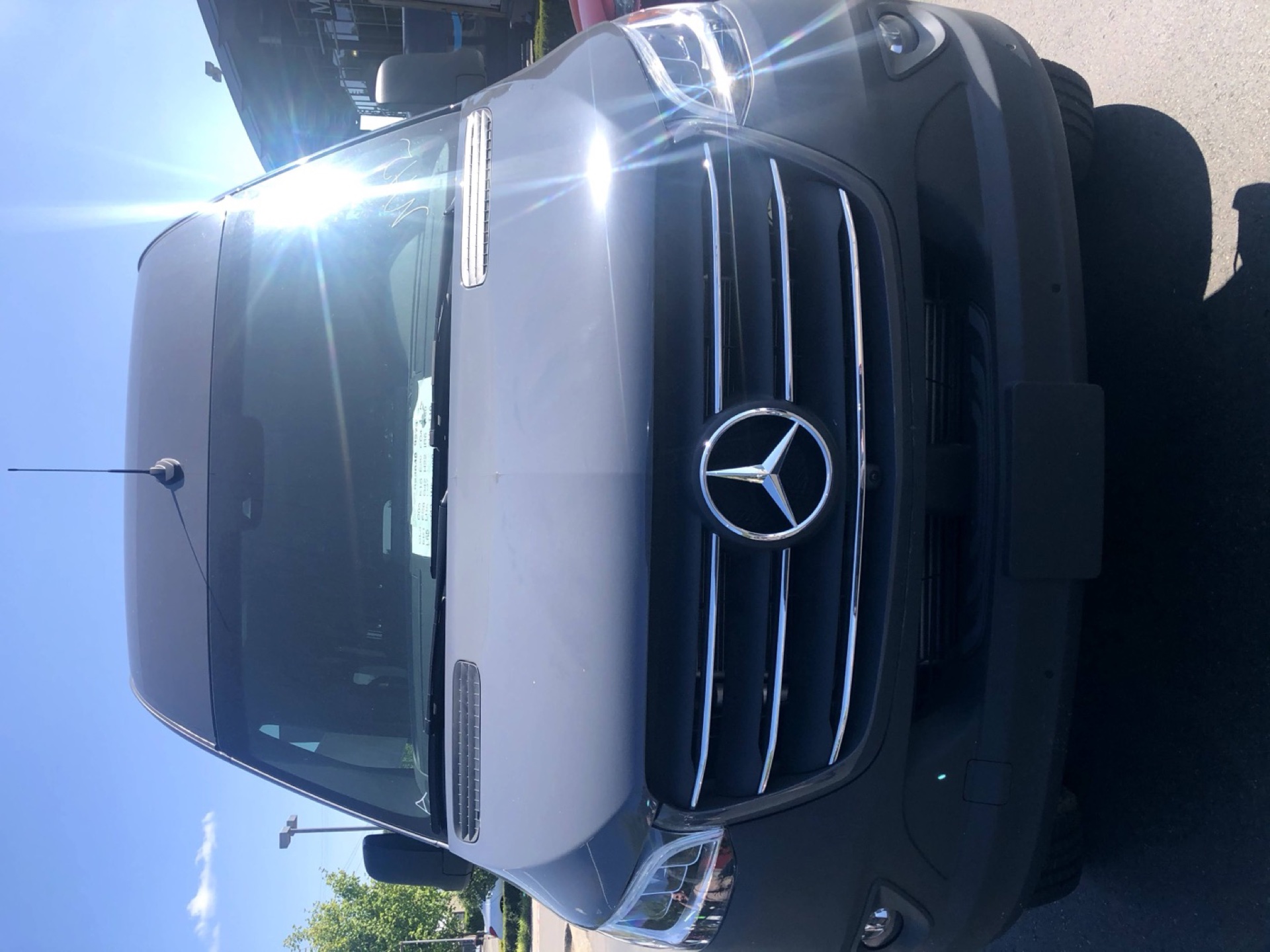
Day One
A blank canvas. A 4×4 Sprinter platform. Everything else to be built.
Built to go anywhere.
An off-grid mobile art studio. Ender 1.0 is a Mercedes-Benz Sprinter 4×4, rebuilt from the inside out into a complete live-work rig — power, water, workshop, all of it.
Designed and built by Joshua Borsman
A blank canvas. A 4×4 Sprinter platform. Everything else to be built.
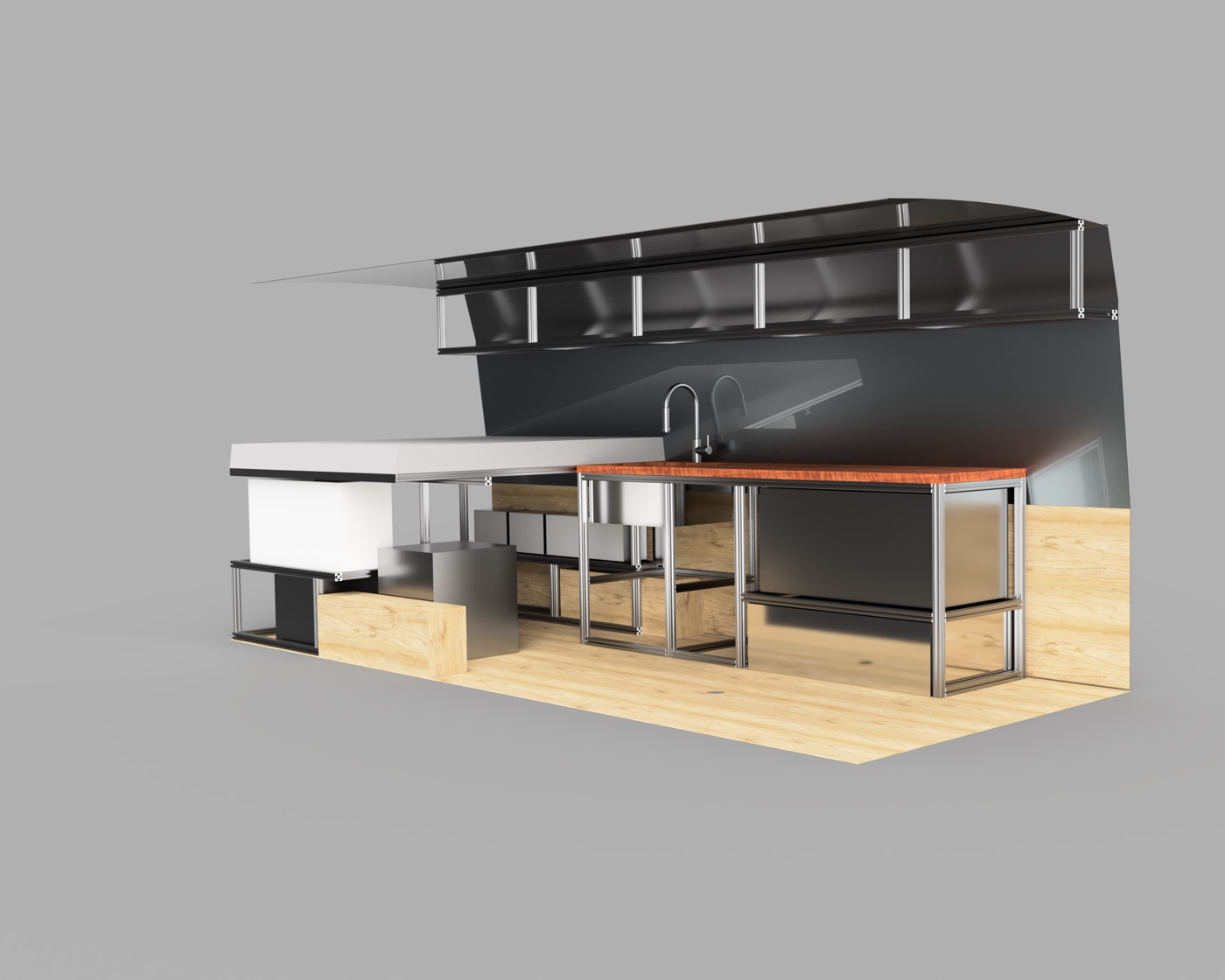
Everything was modeled in 3D before anything was cut. The roof rack alone went through eight versions; the interior, a few more. What landed: an aluminum extrusion chassis with a Tigerwood deck.
Drawings by Joshua Borsman.
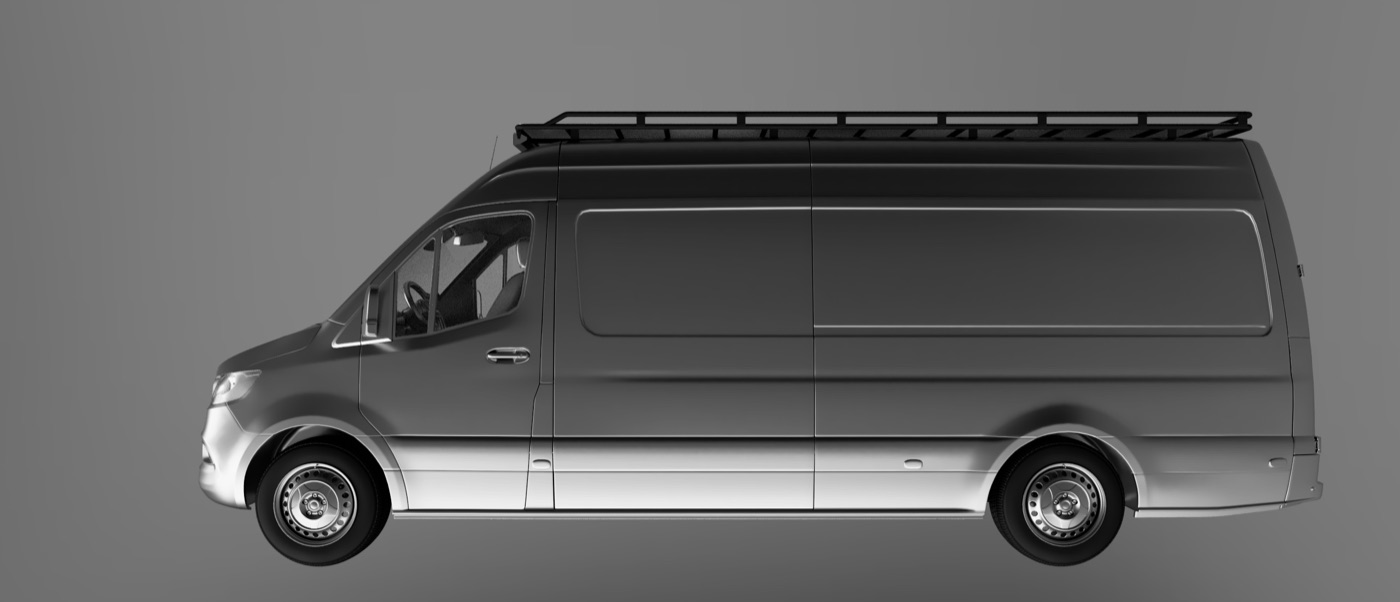
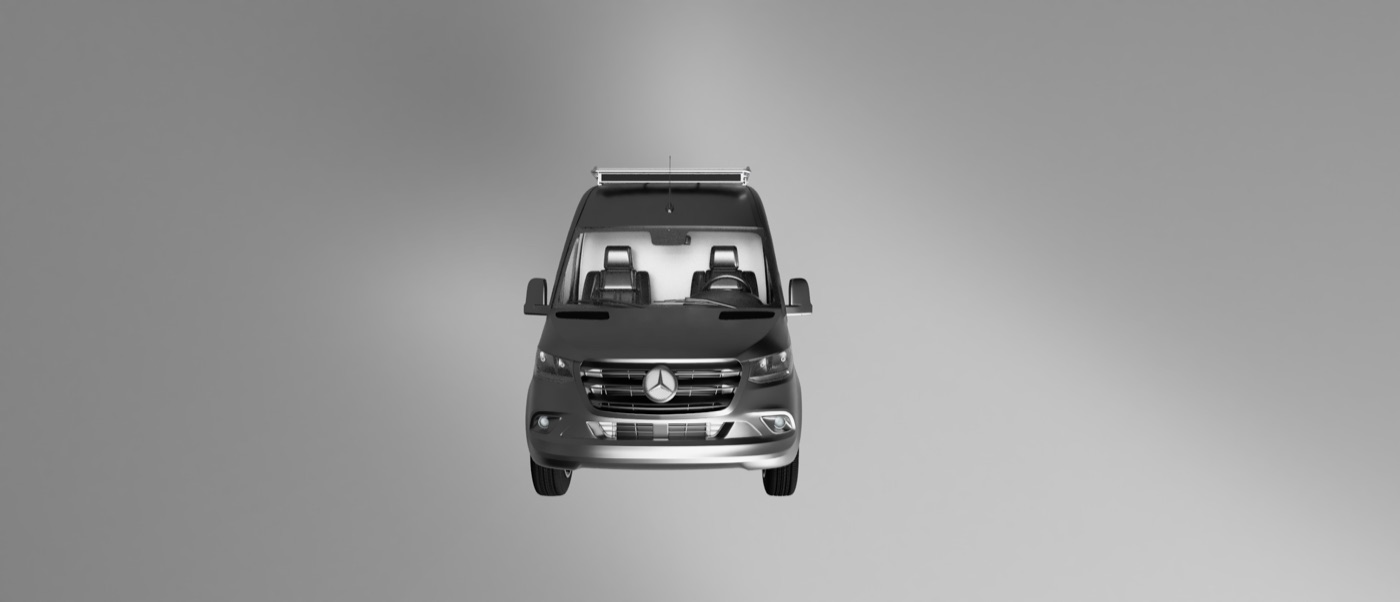
The roof rack was the hardest part of the build. Joshua drew the blueprints. Joe Clark led the fabrication, and Kai Bonnell — 20+ years on the torch — TIG welded every joint. It carries four solar panels and anchors the entire power system to the van.
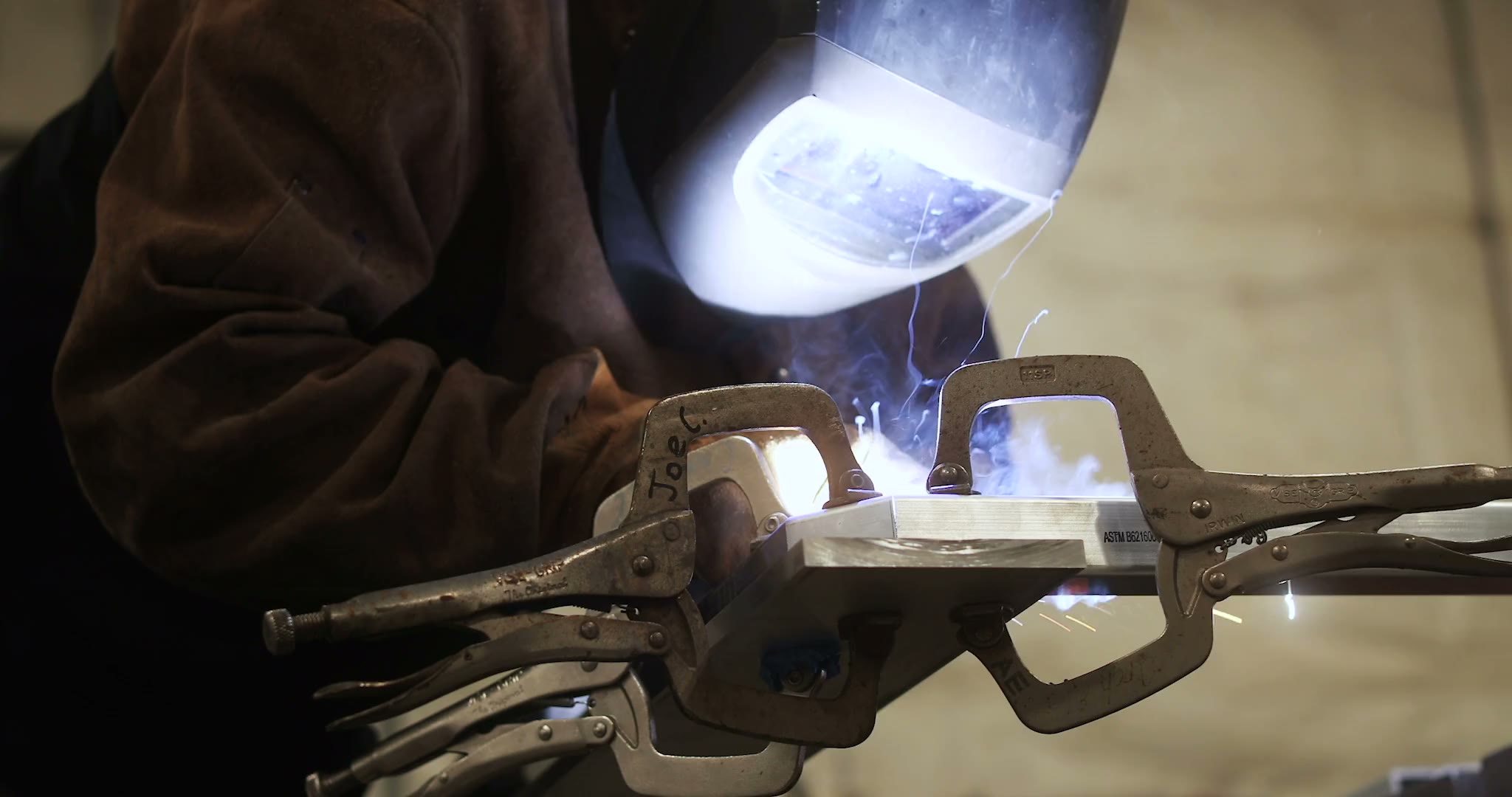
The Ender Roof Rack — full fabrication process, 6 min.
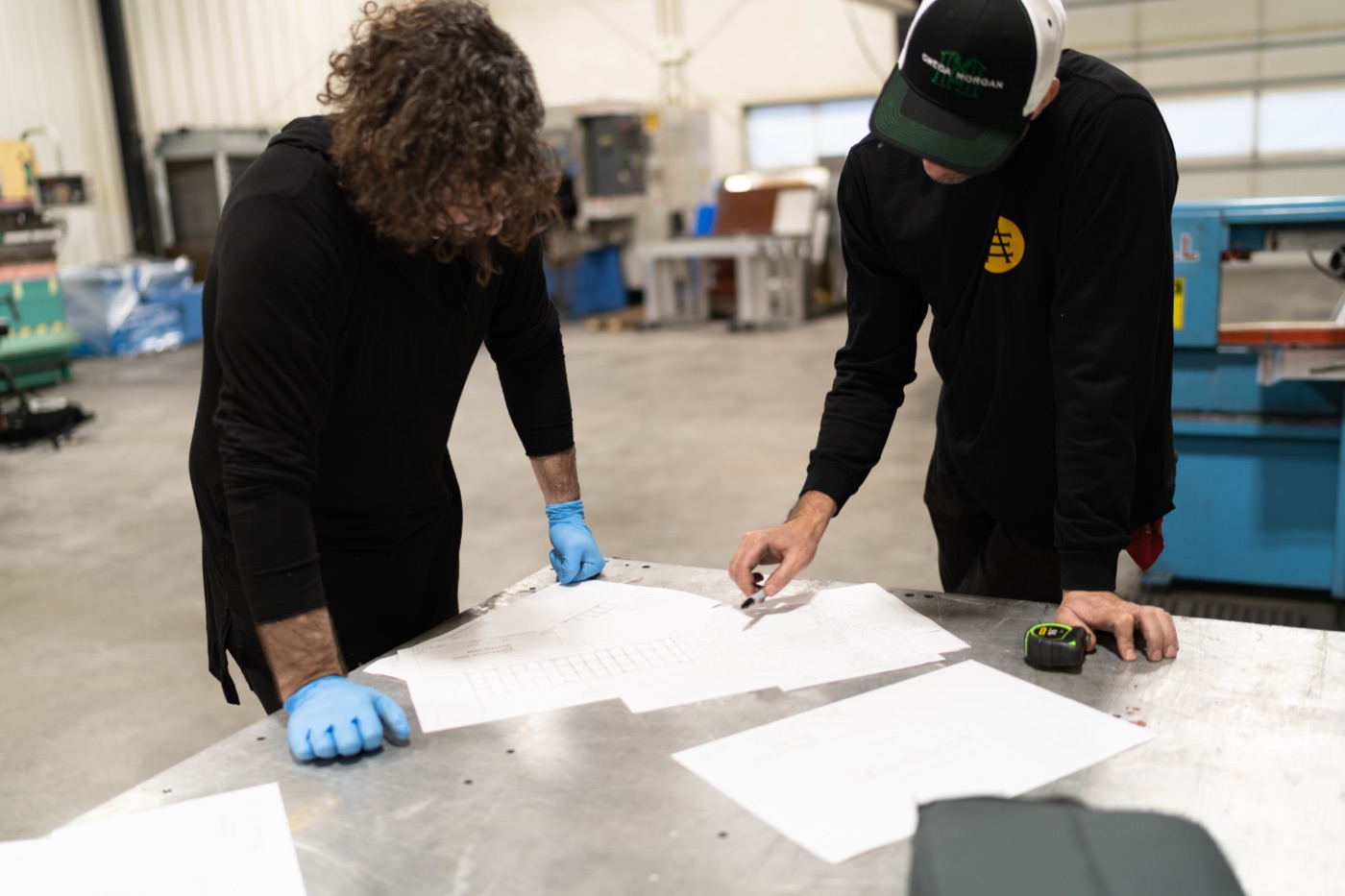
Walking the drawings one more time before the first cut.
Joshua's drawings come first. The team lays them on a steel work surface and walks every measurement before ordering material.
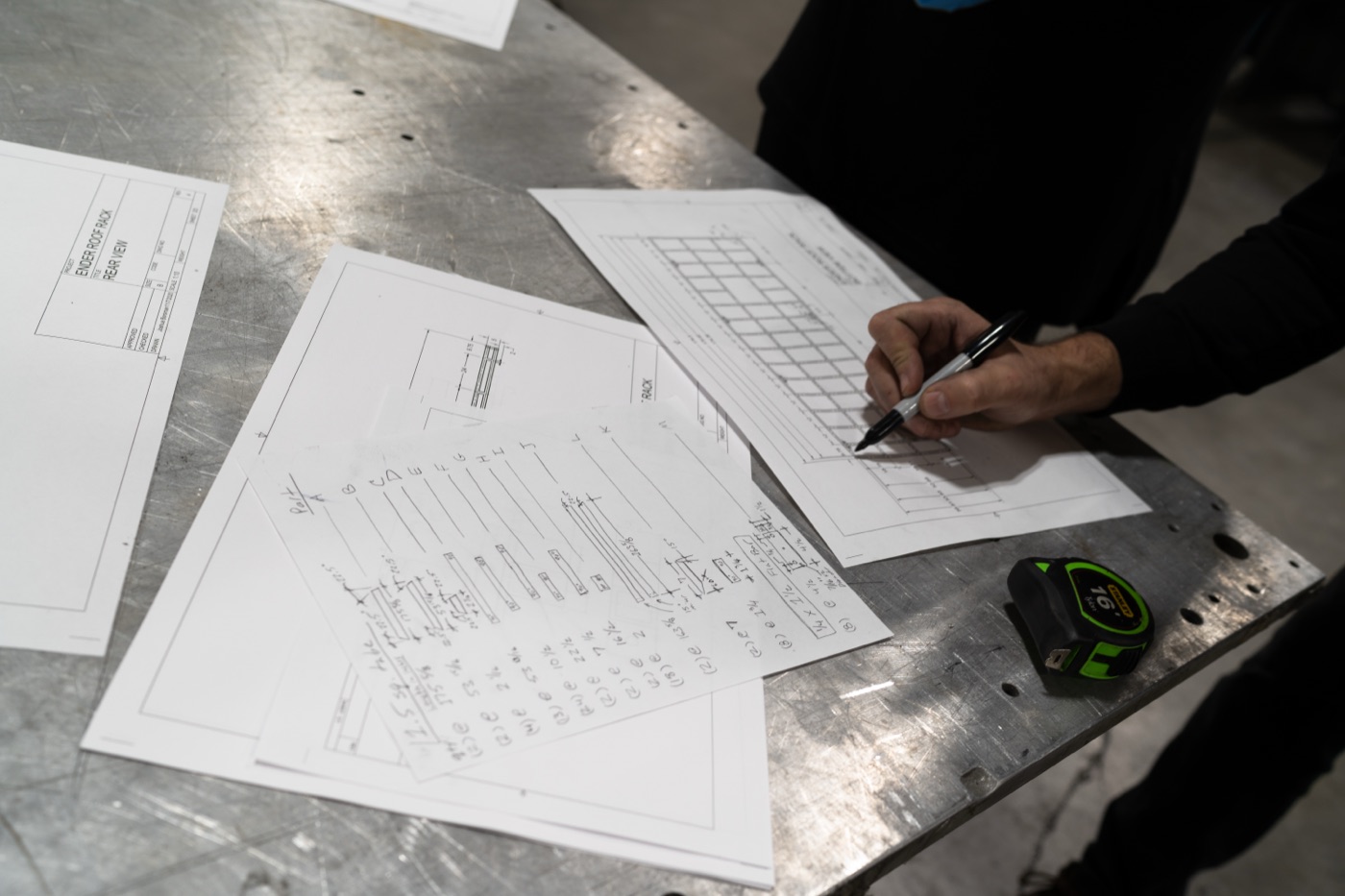
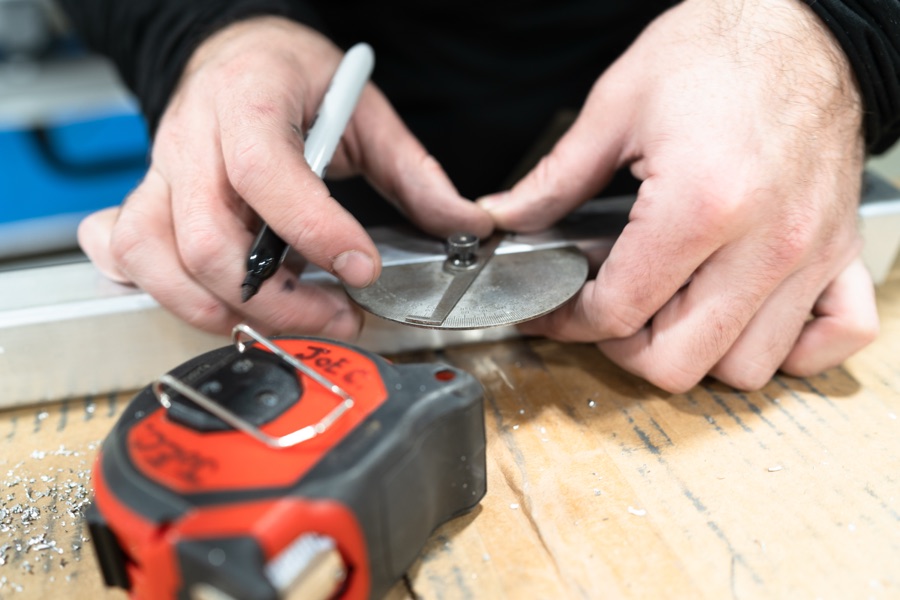 Precision layout
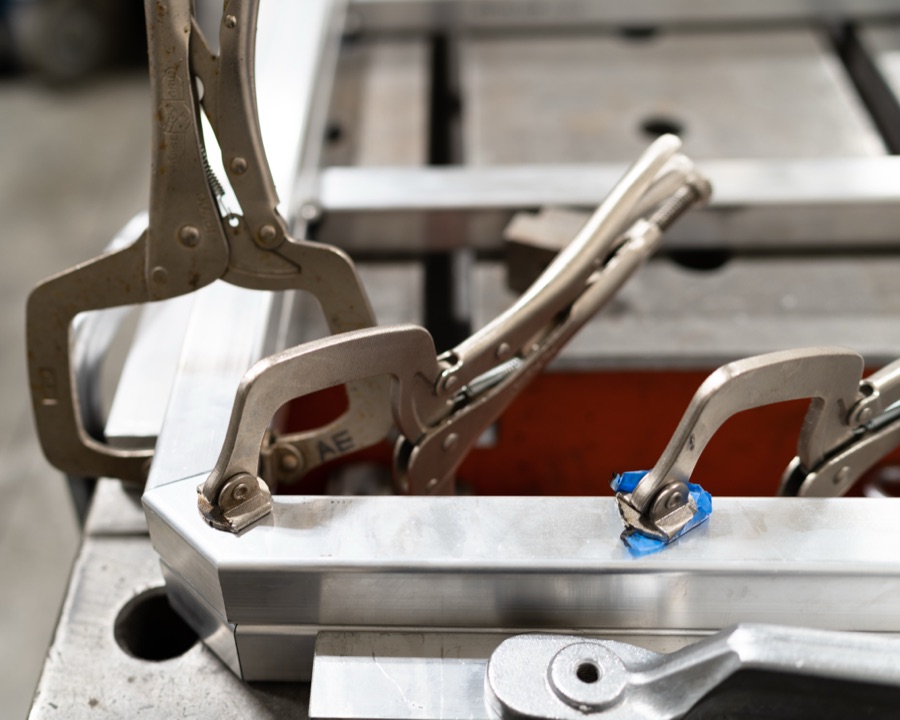 Clamped to tolerance
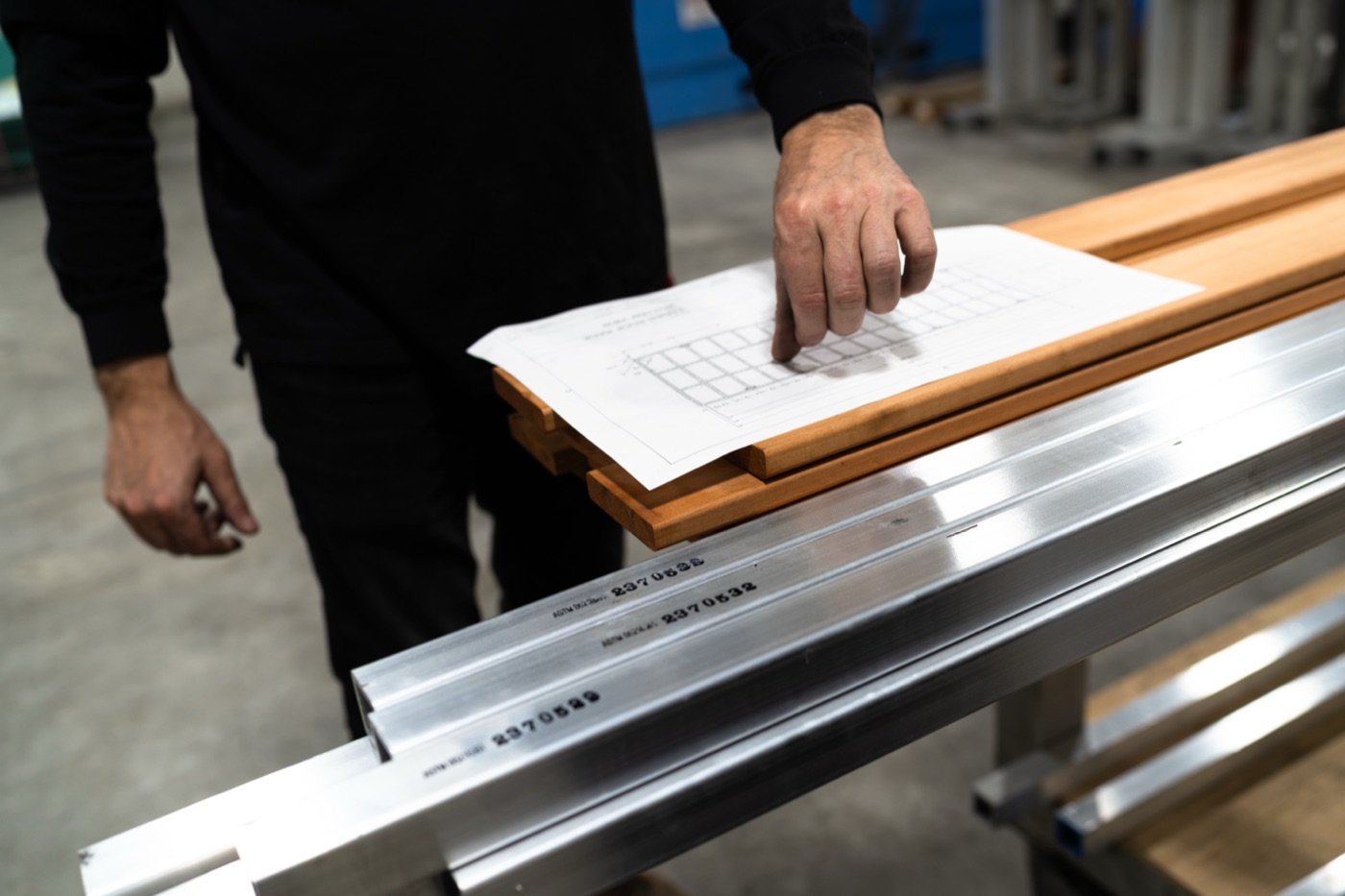
Aircraft-grade aluminum and Tigerwood.
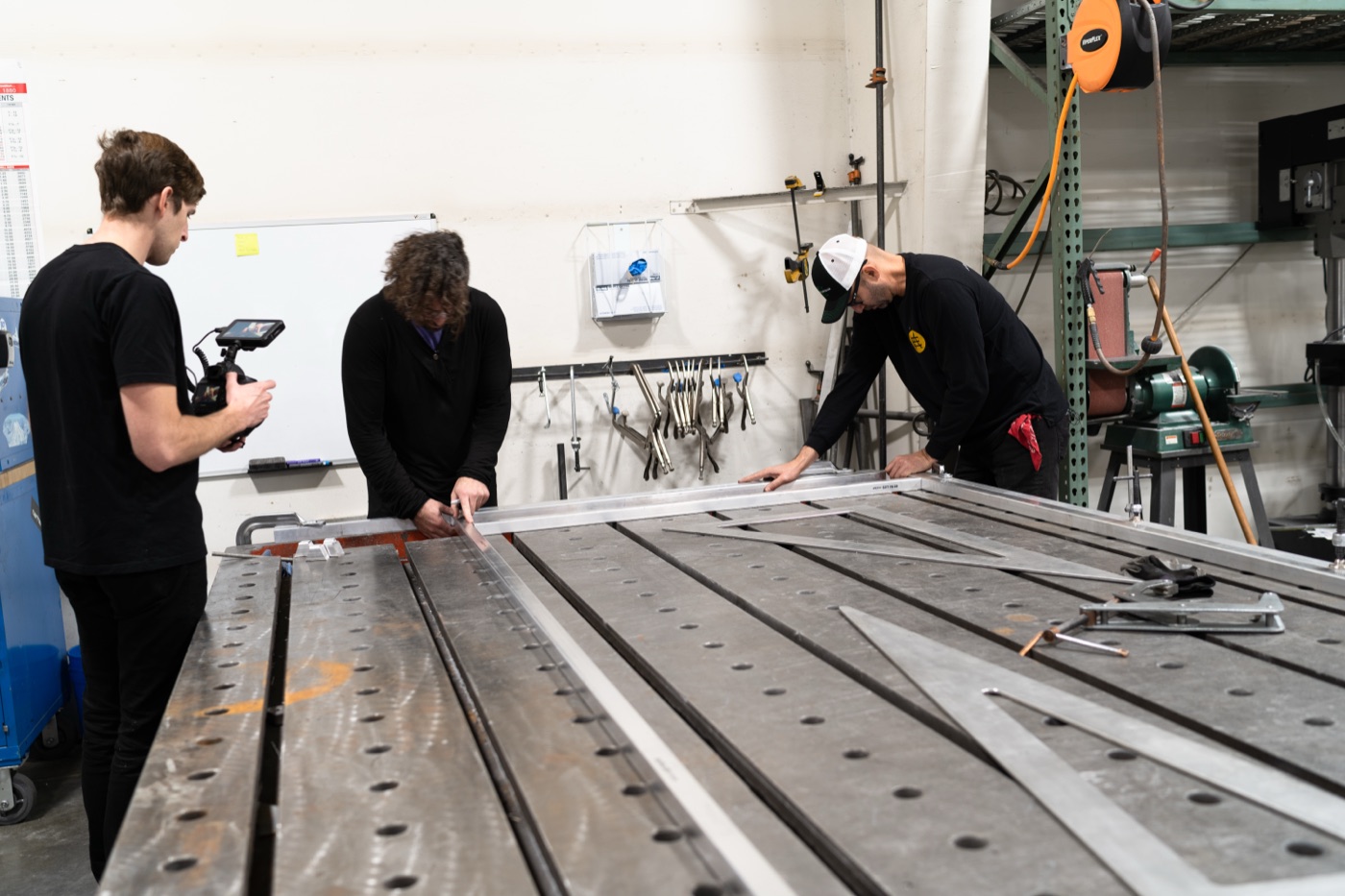
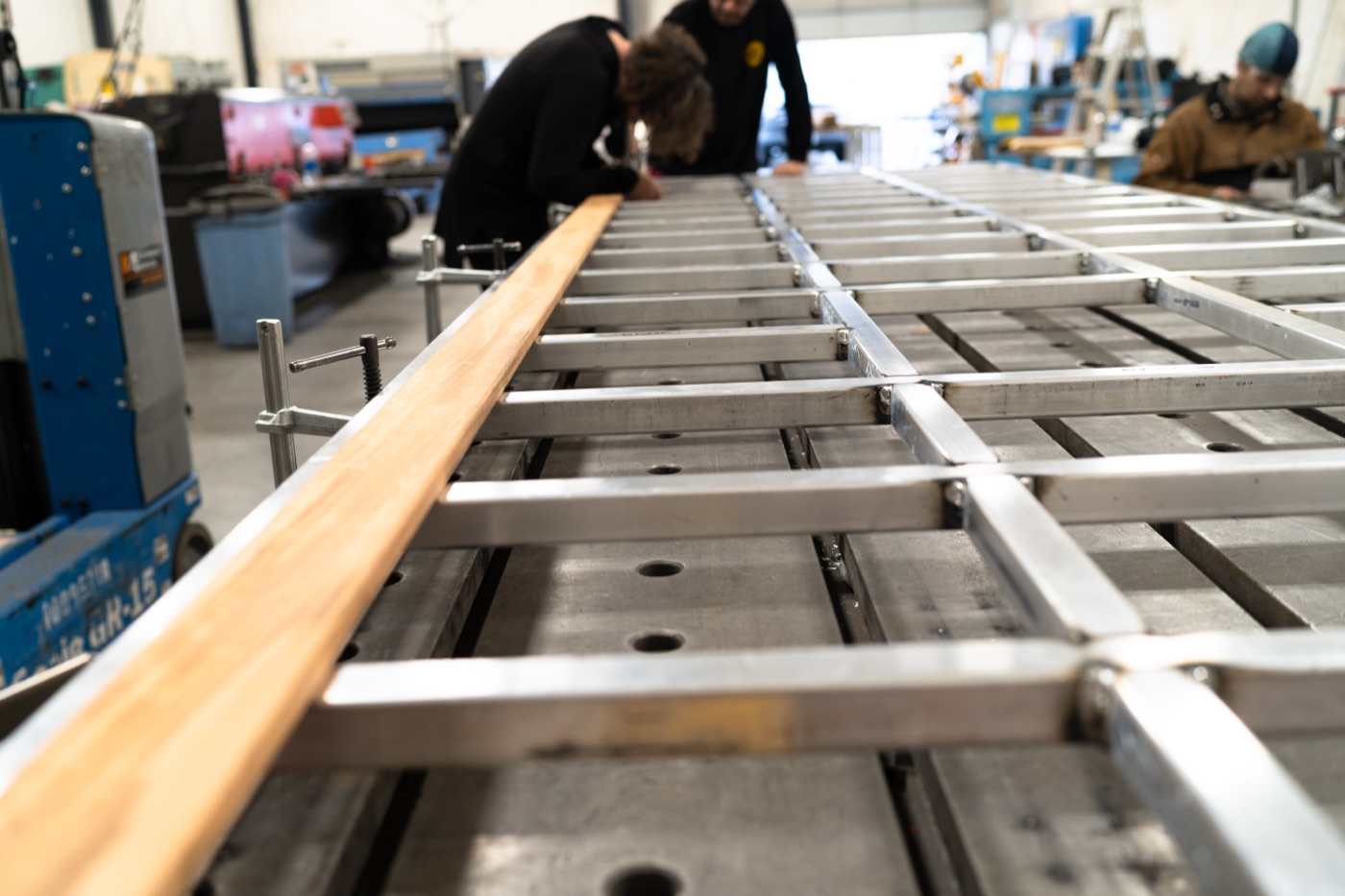
The extrusion frame goes on the welding table. Joints get located and clamped before anyone strikes an arc.
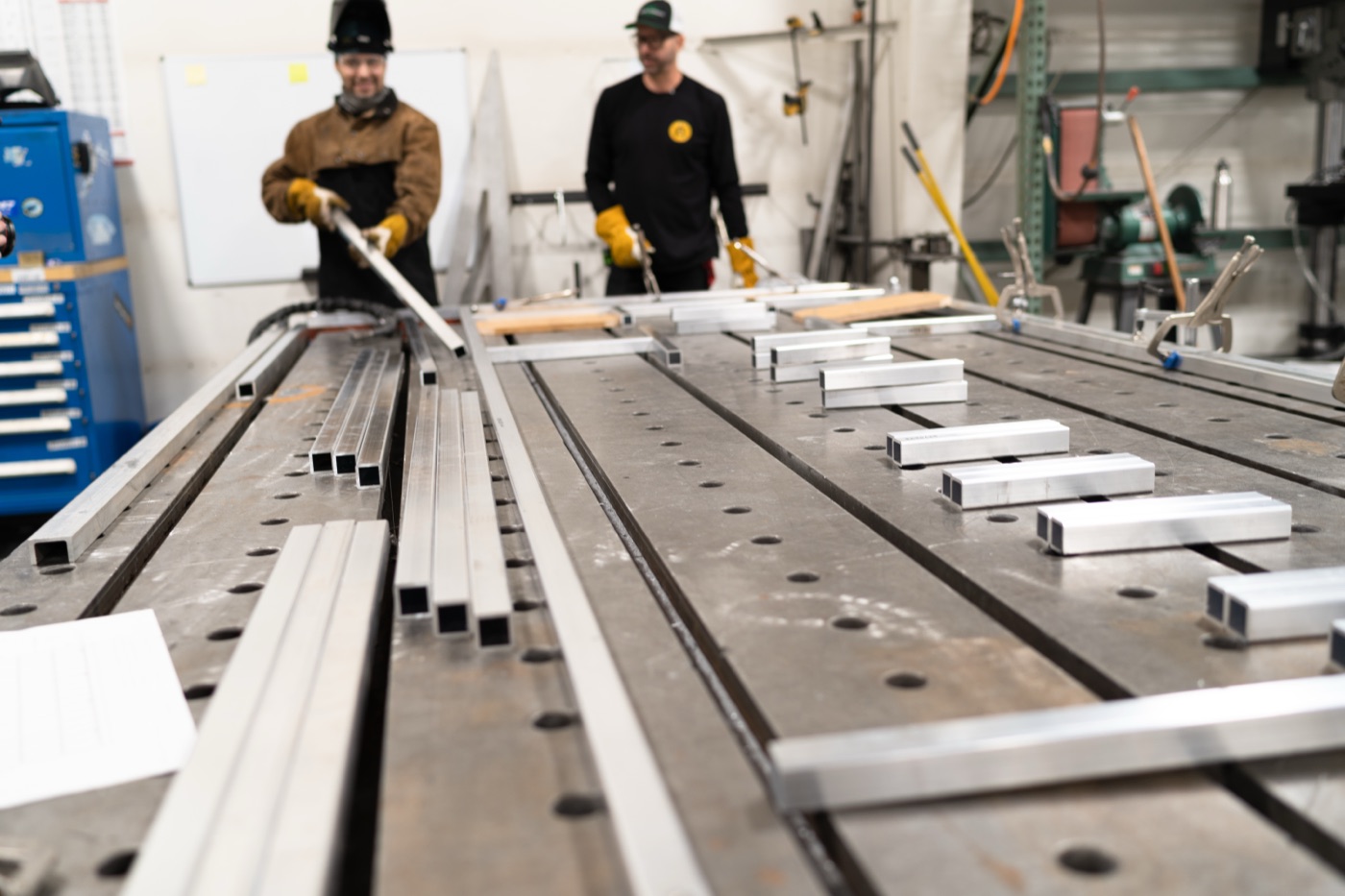 Positioning the frame
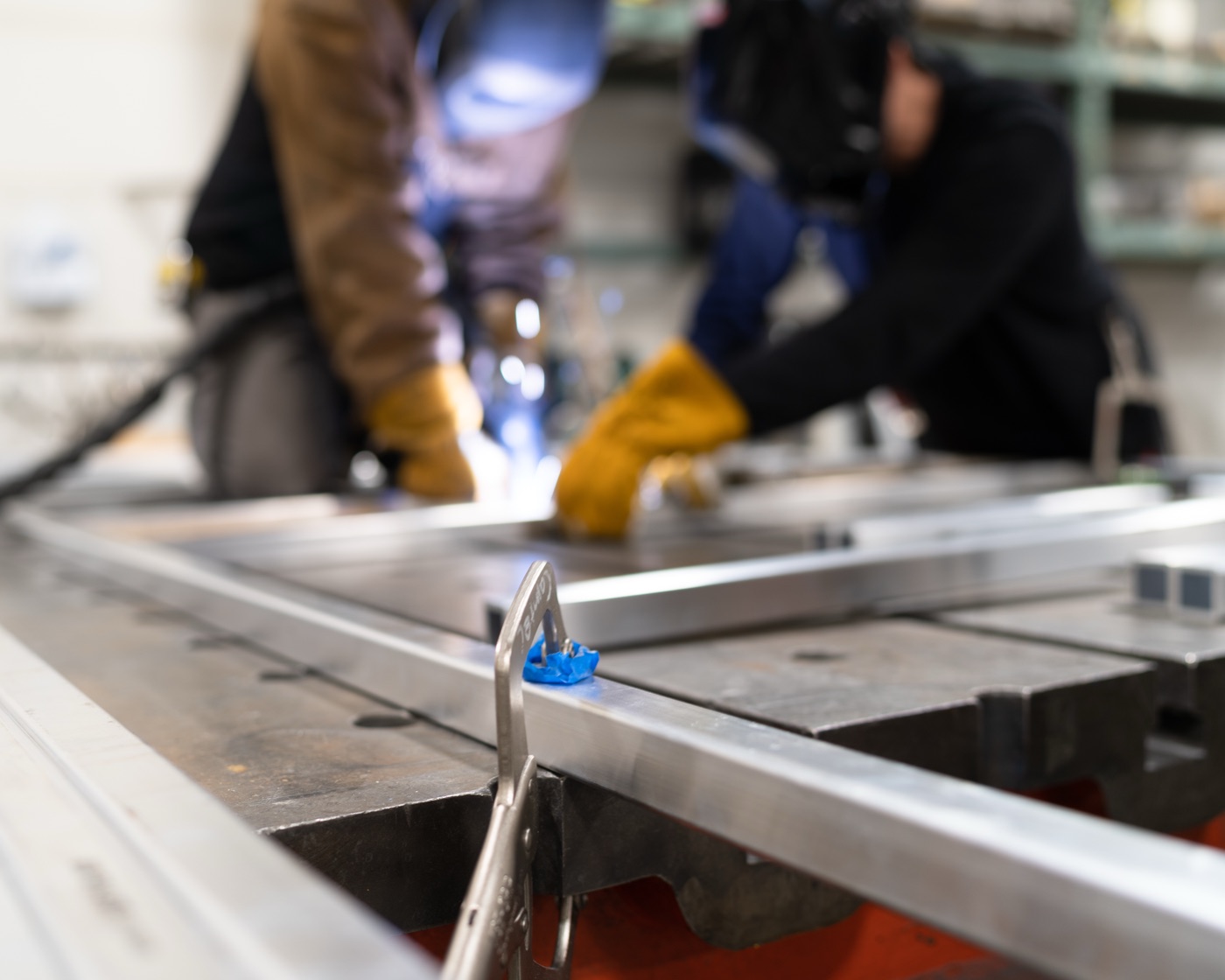 Arc light
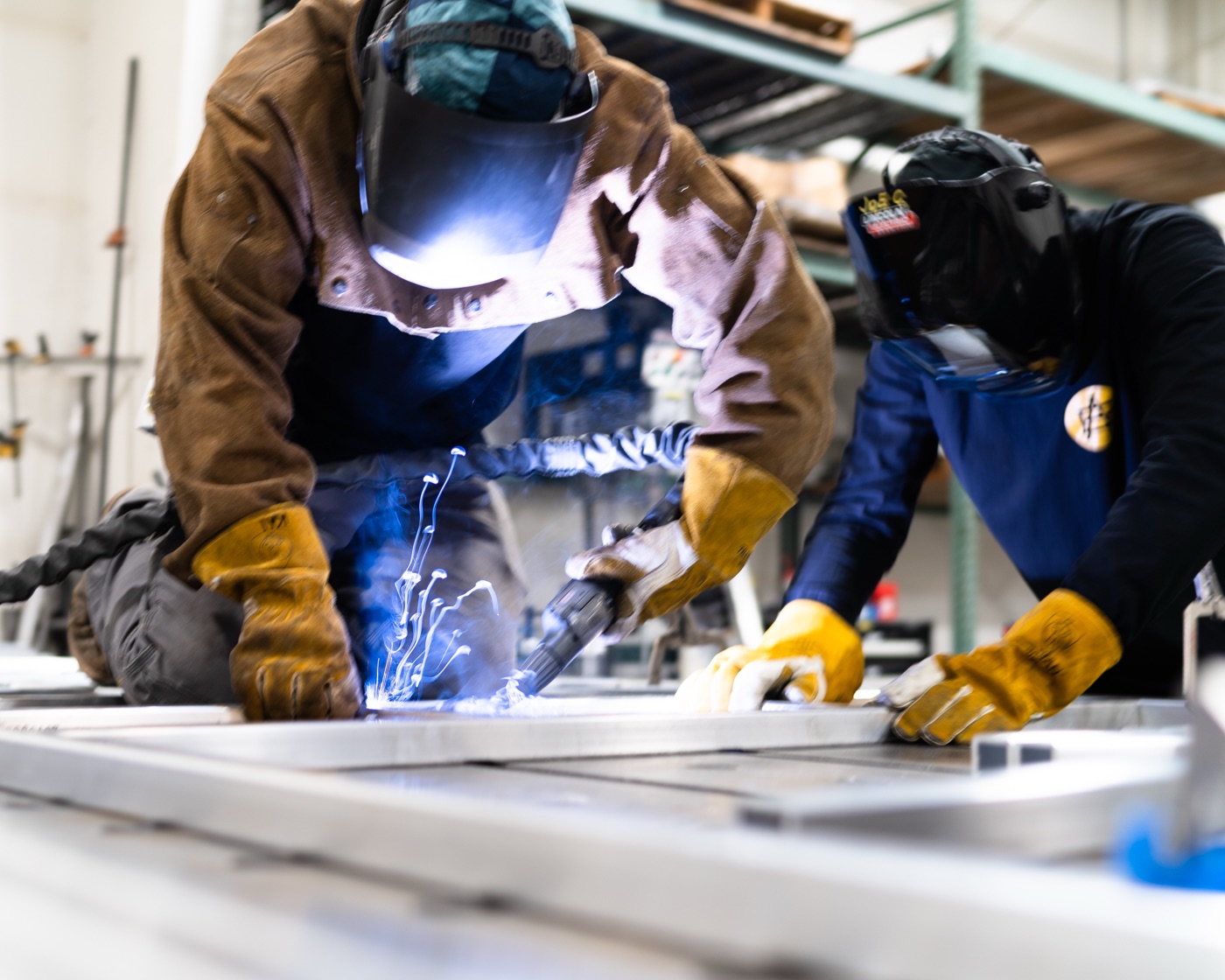
20 years on the torch. It shows.
Kai Bonnell did most of the welding — 20+ years on the torch — running TIG beads on every joint. Joe Clark directed the fabrication. Between them, the raw aluminum became a rack stiff enough to carry the full solar array without flex.
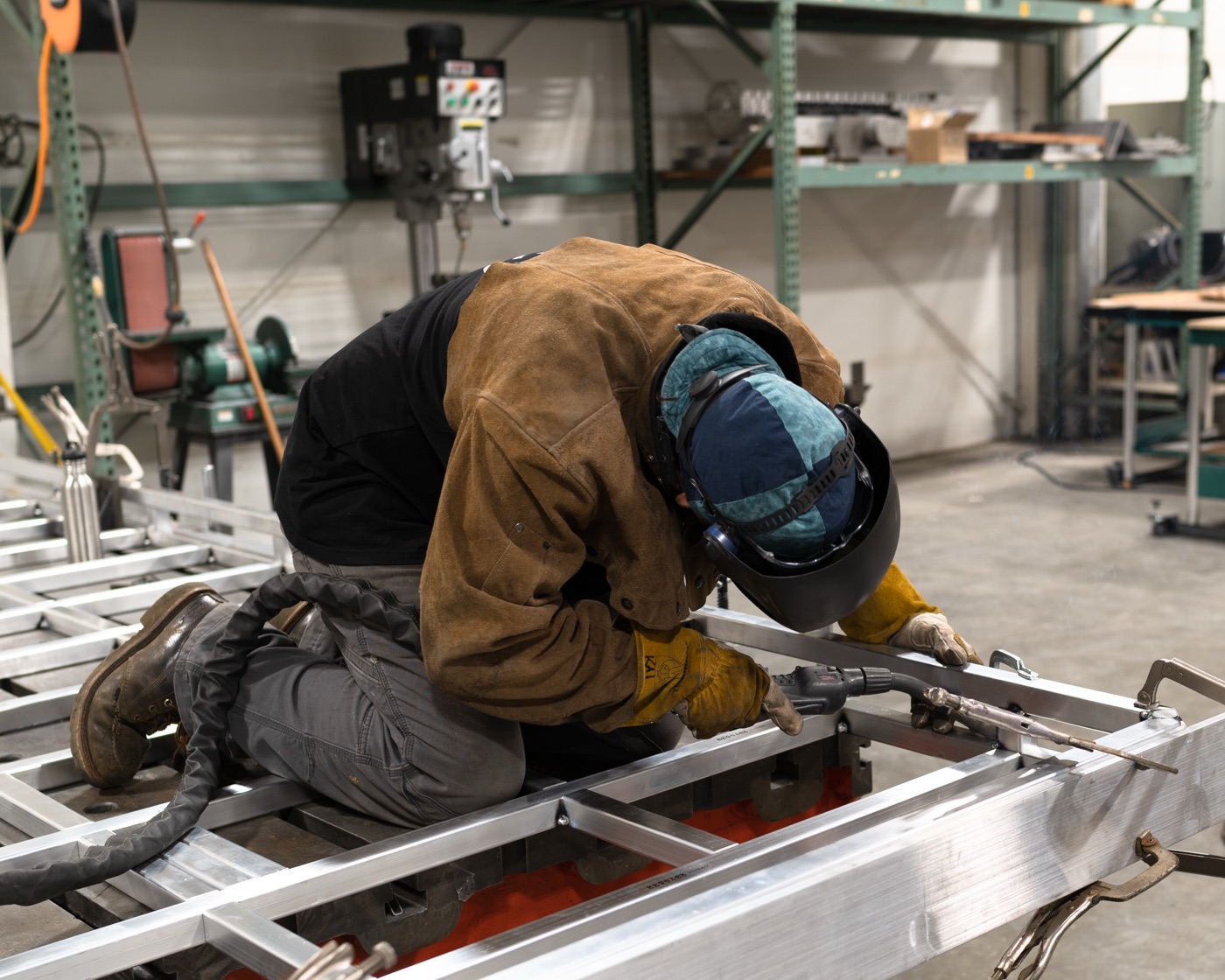
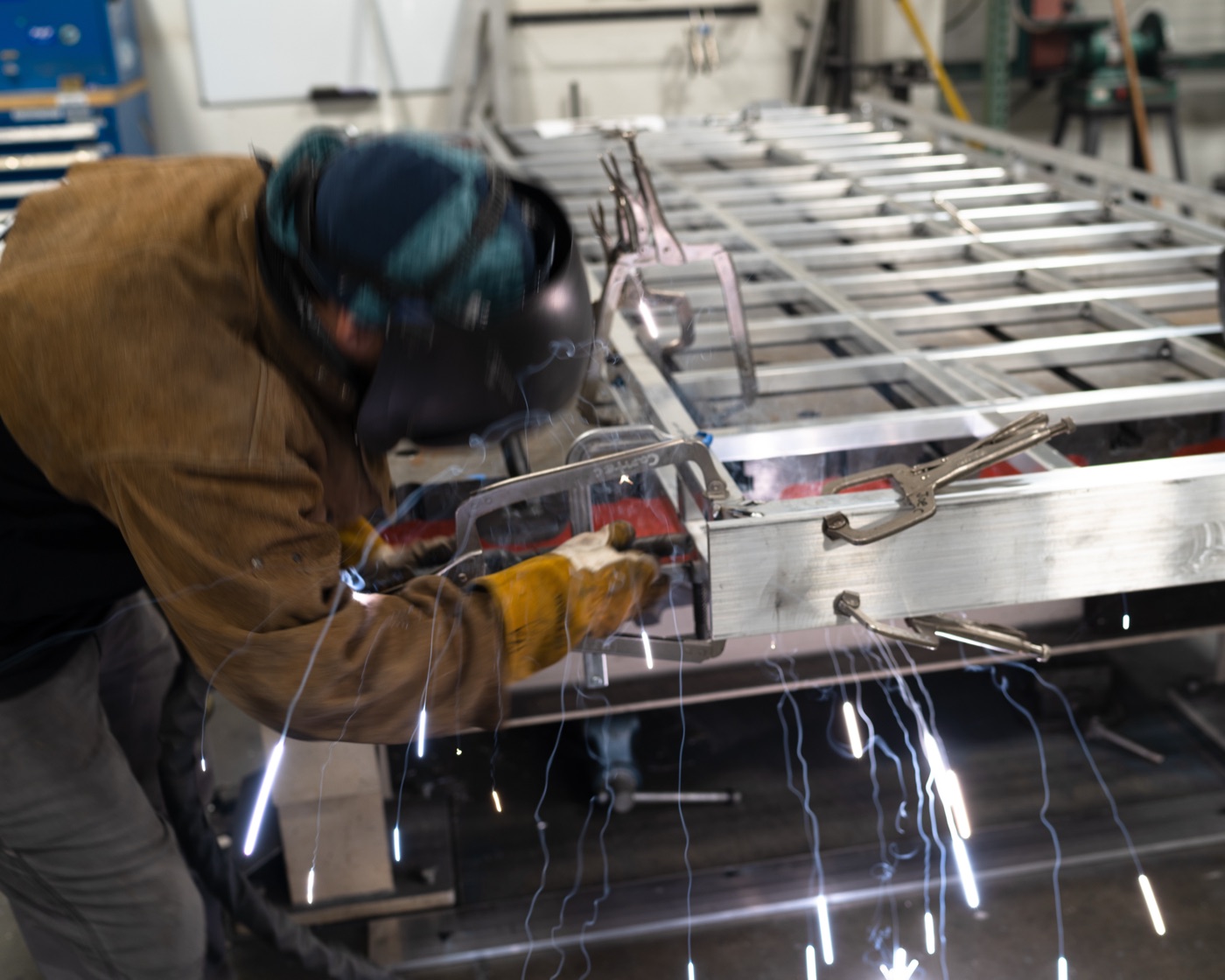
Welding through the last corners of the frame.
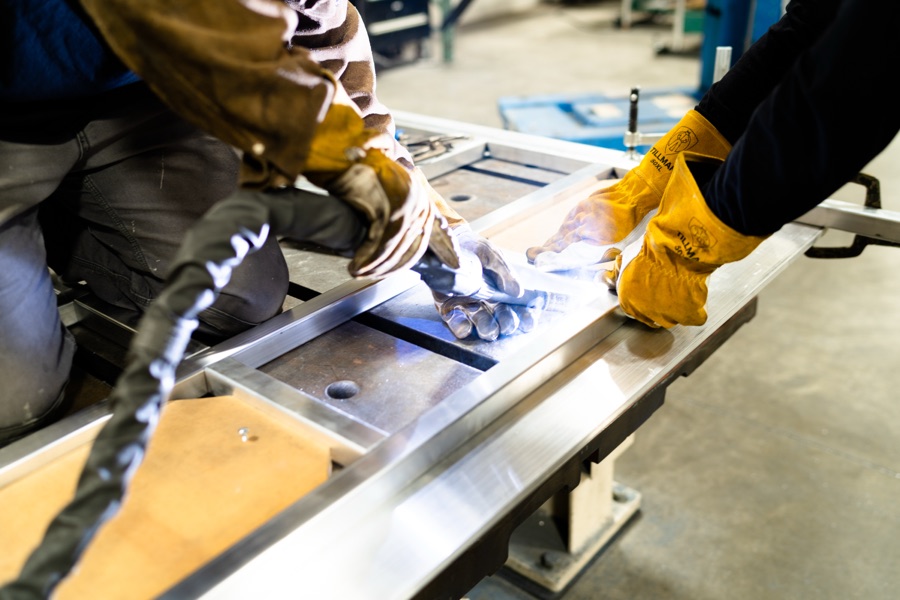 The team
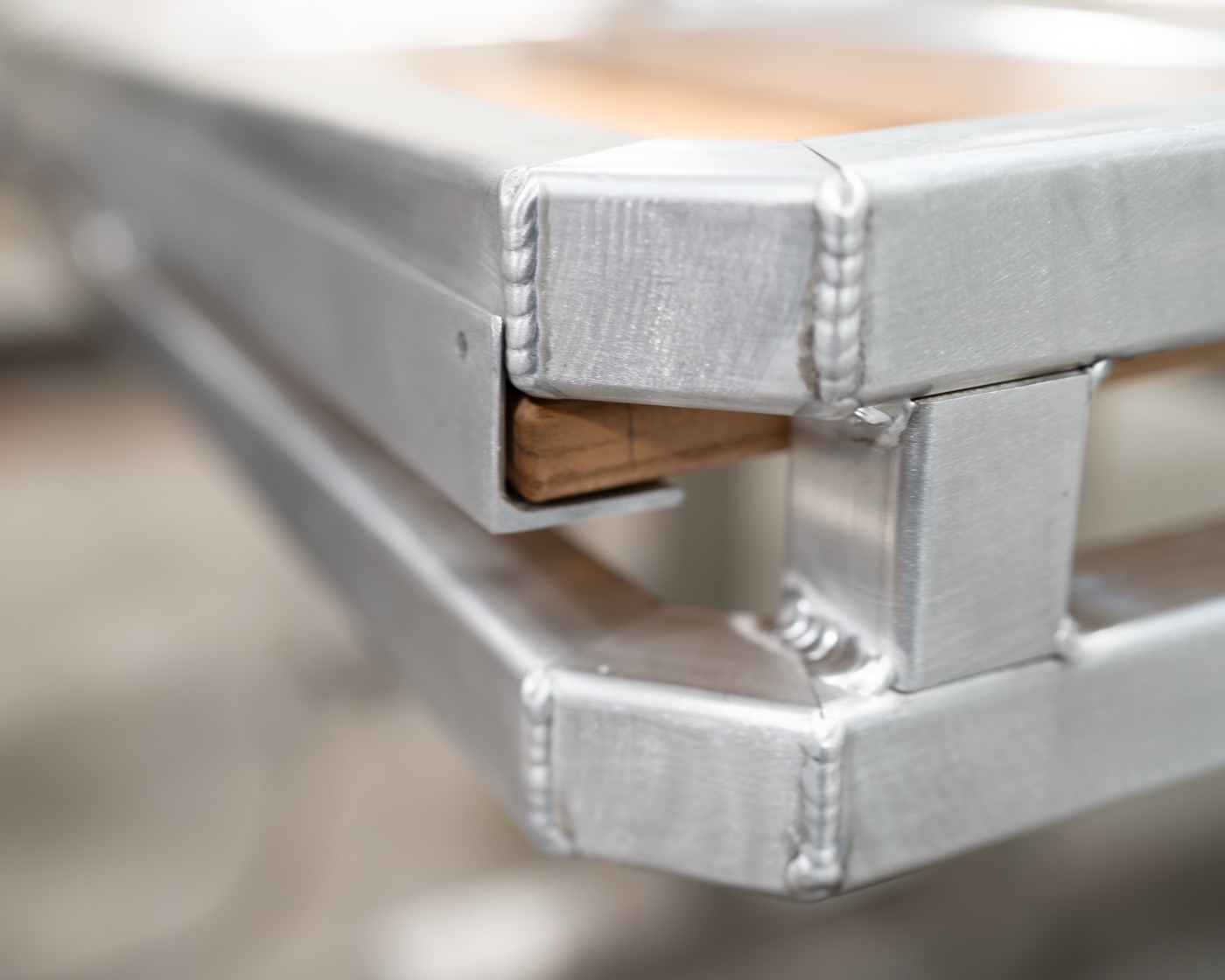 Finished welds
The first slat drops into the frame.
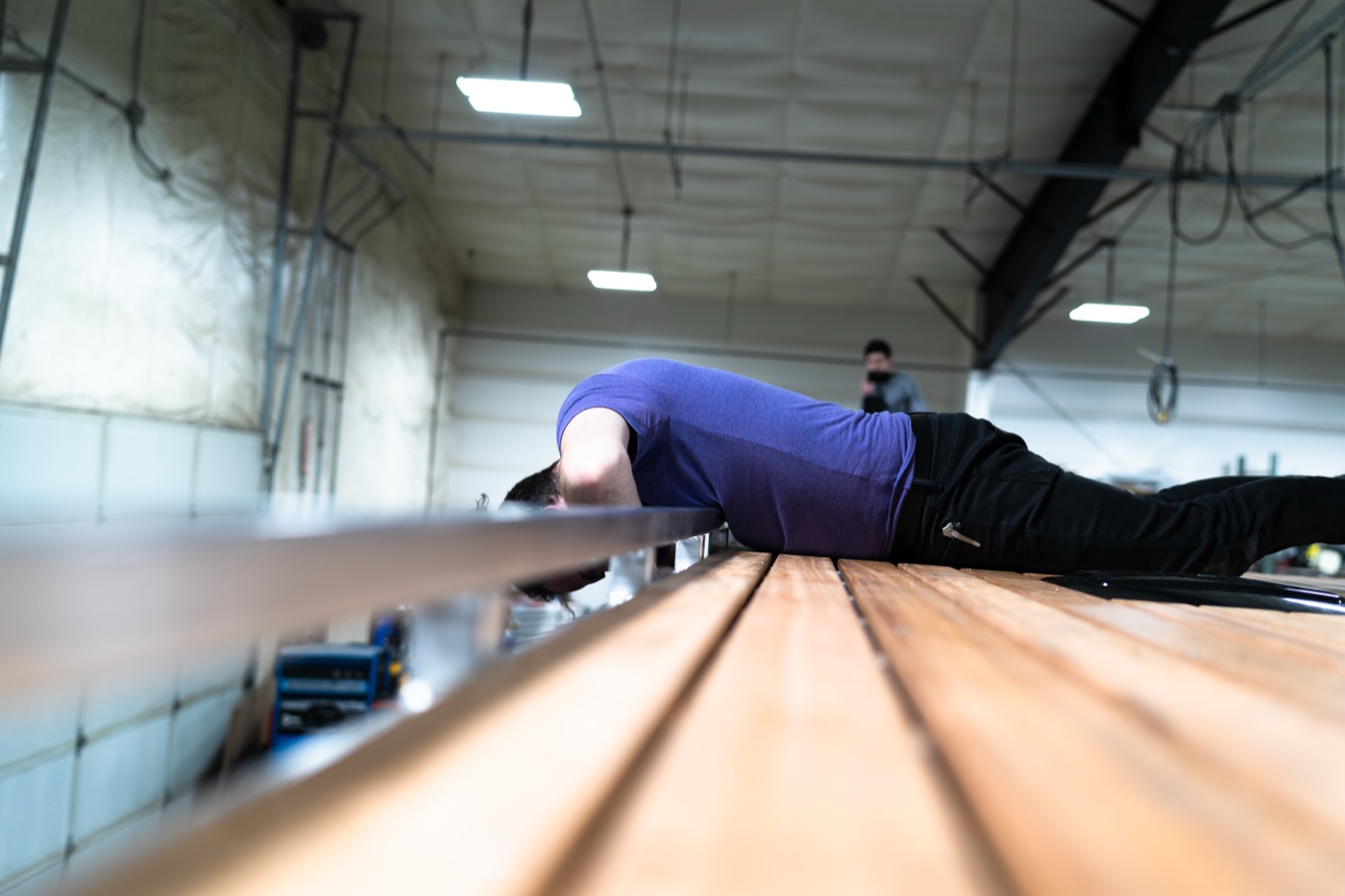
Each Tigerwood slat is trimmed to length and screwed straight into the aluminum with stainless. The small wood blocks between them are just spacers — they hold the gap until each slat is fixed, then come out.
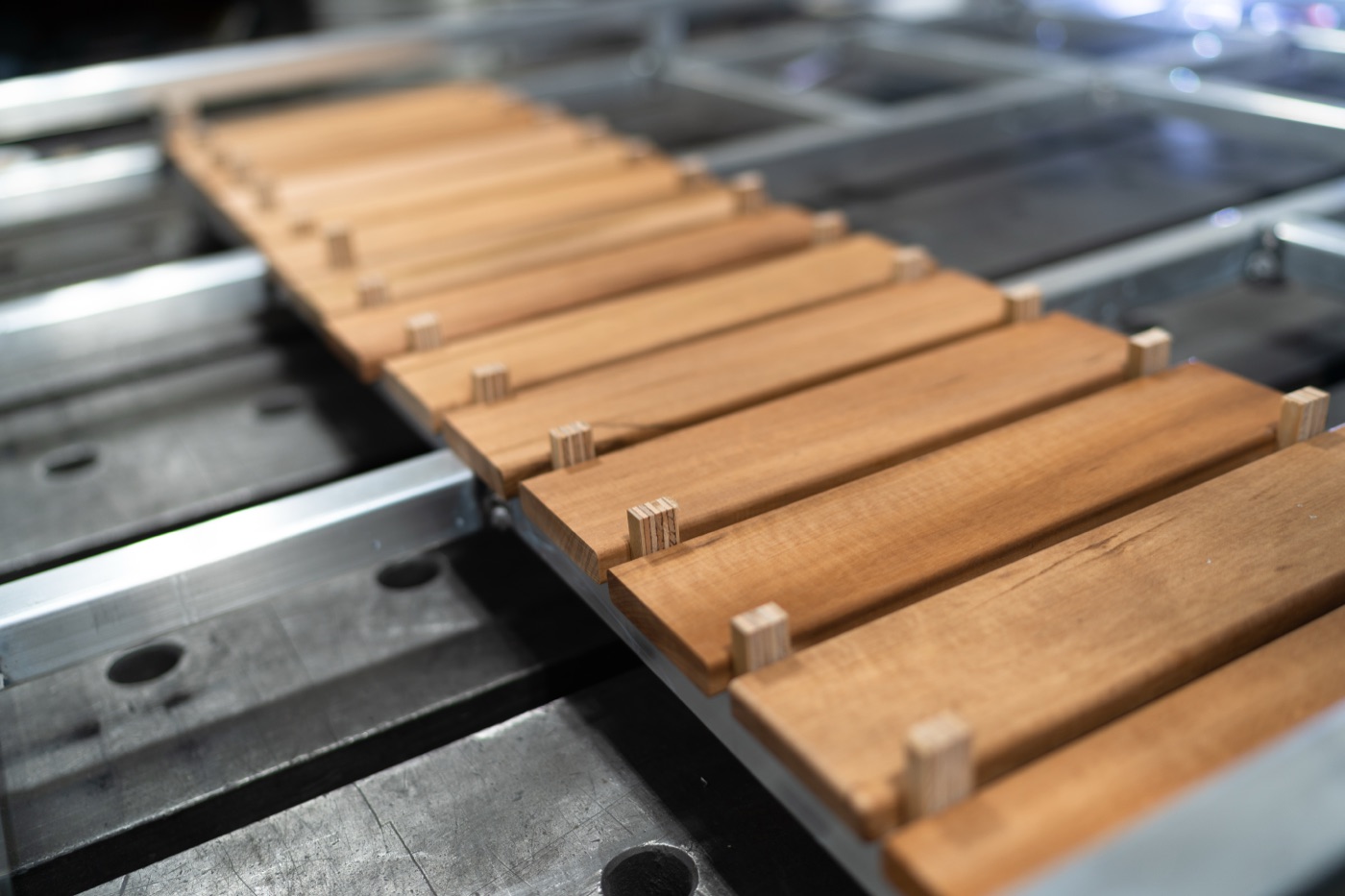
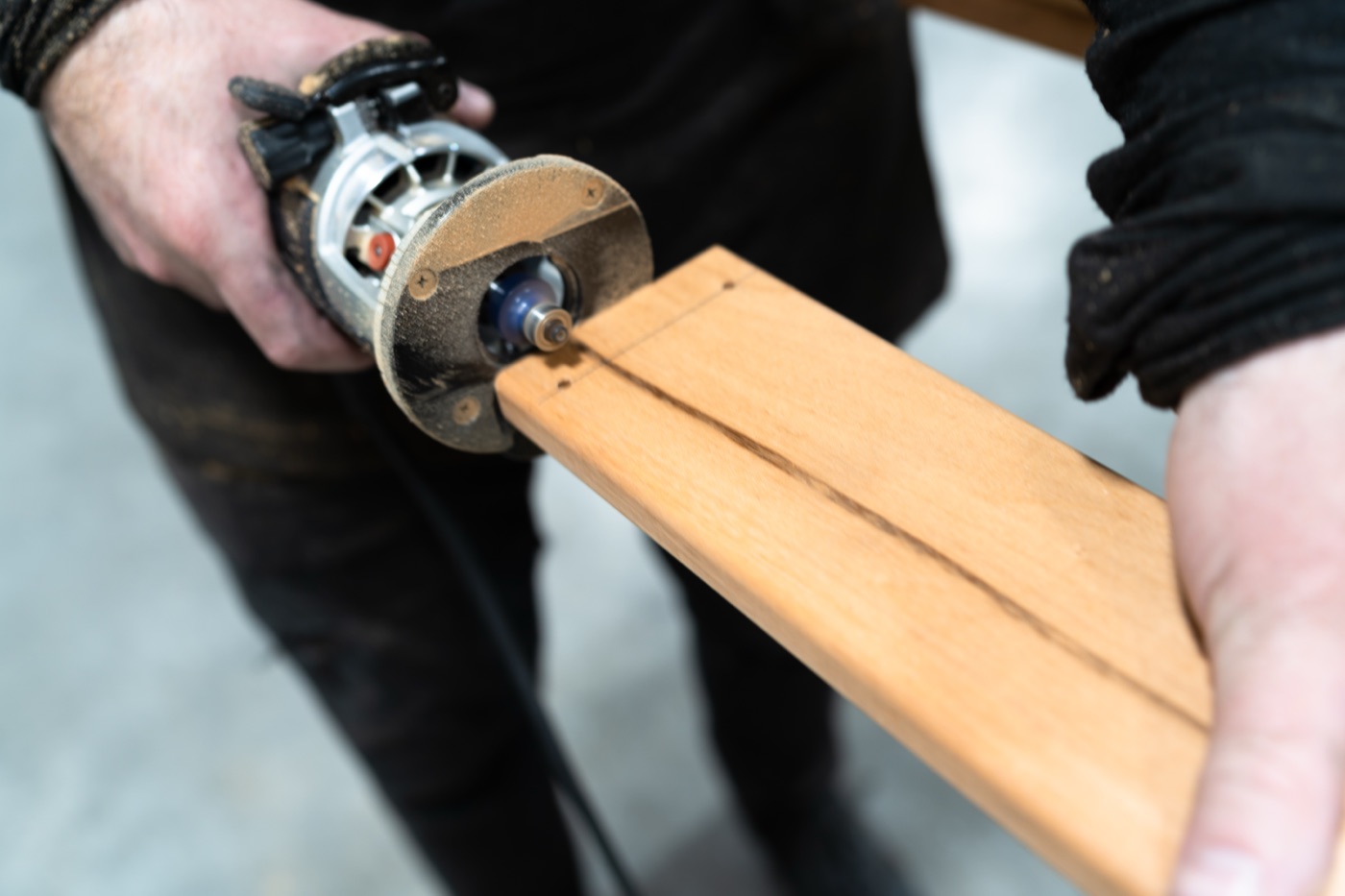 Tigerwood detail
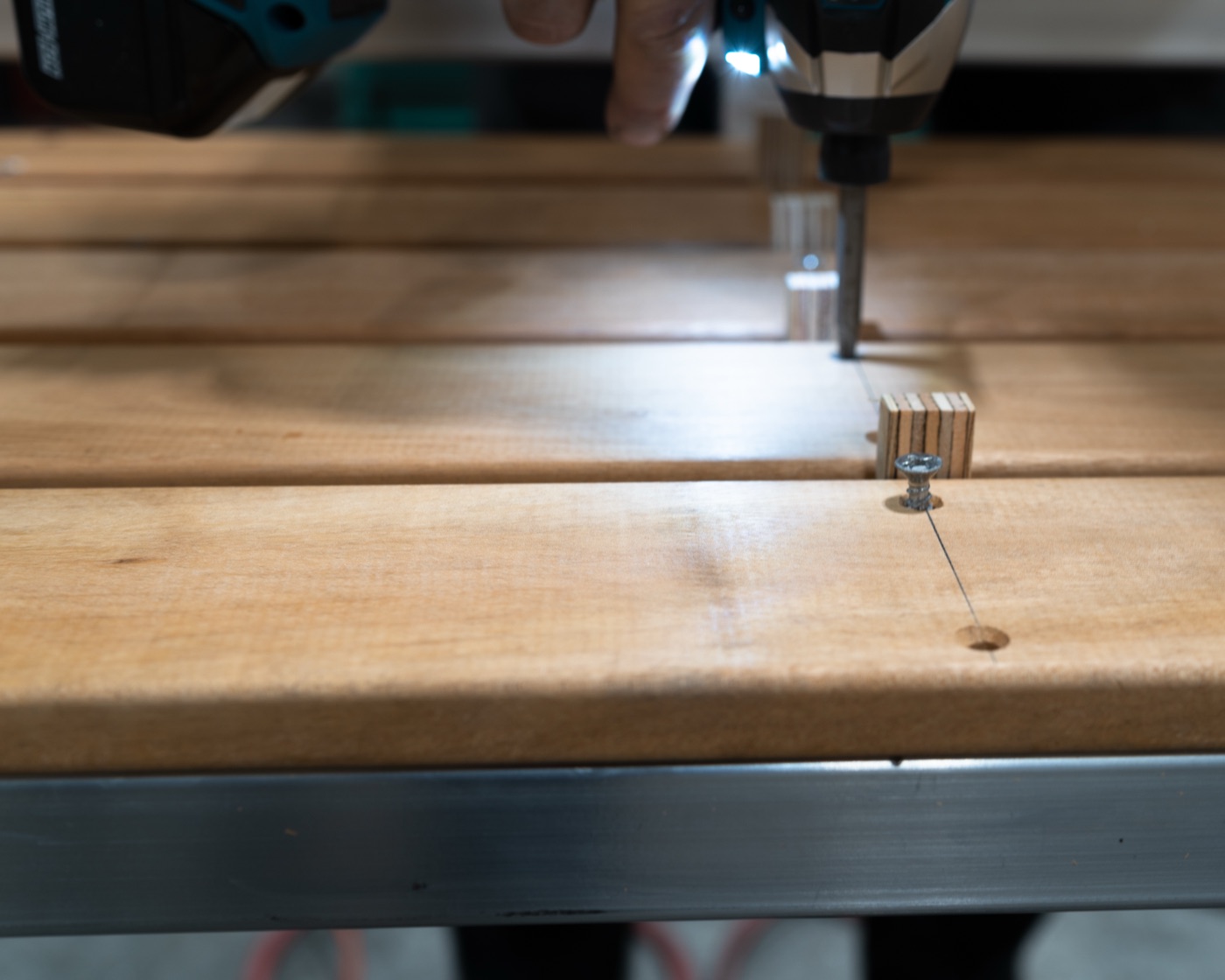 Stainless fastening
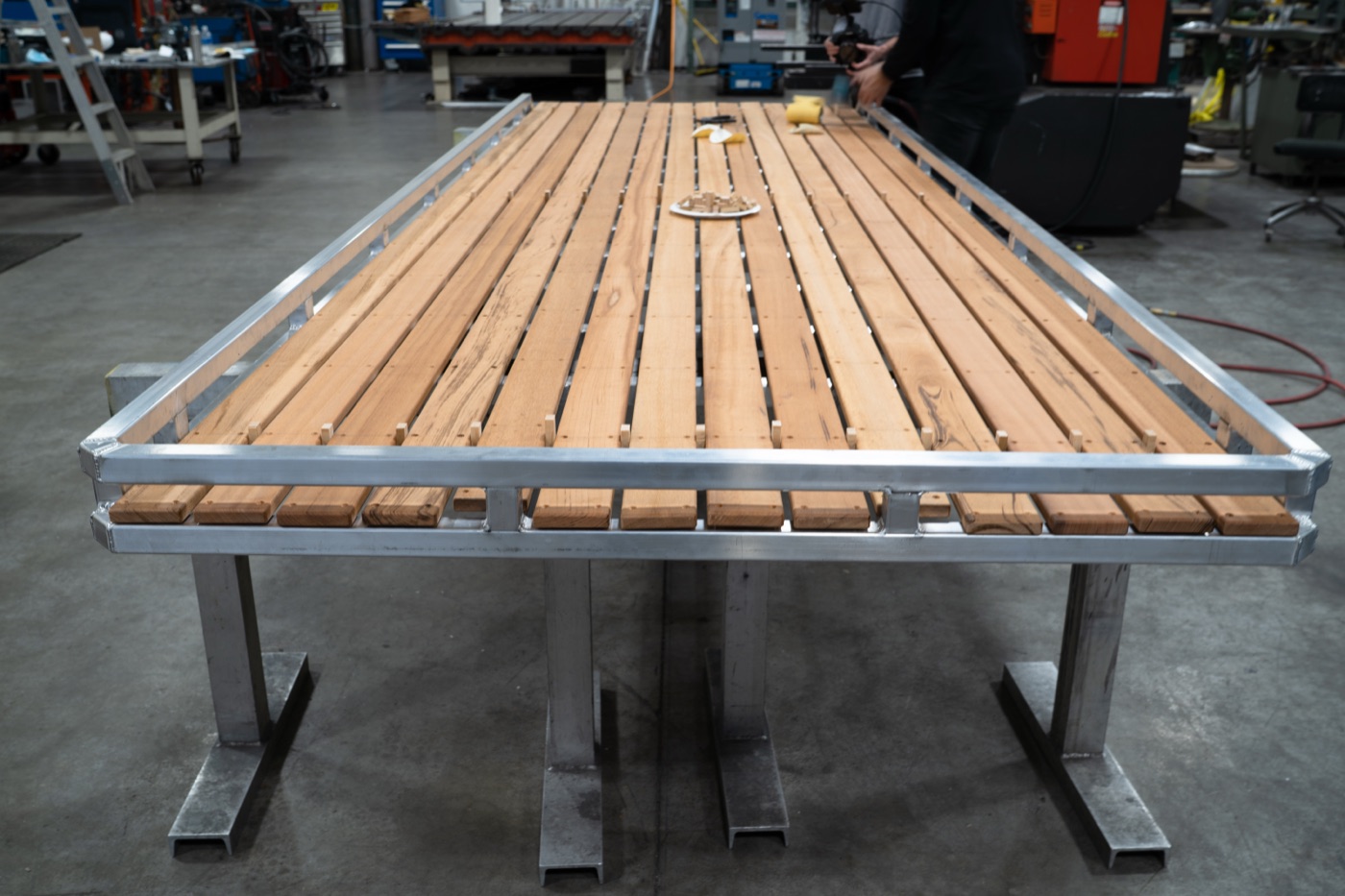
The finished rack — before it meets the van.
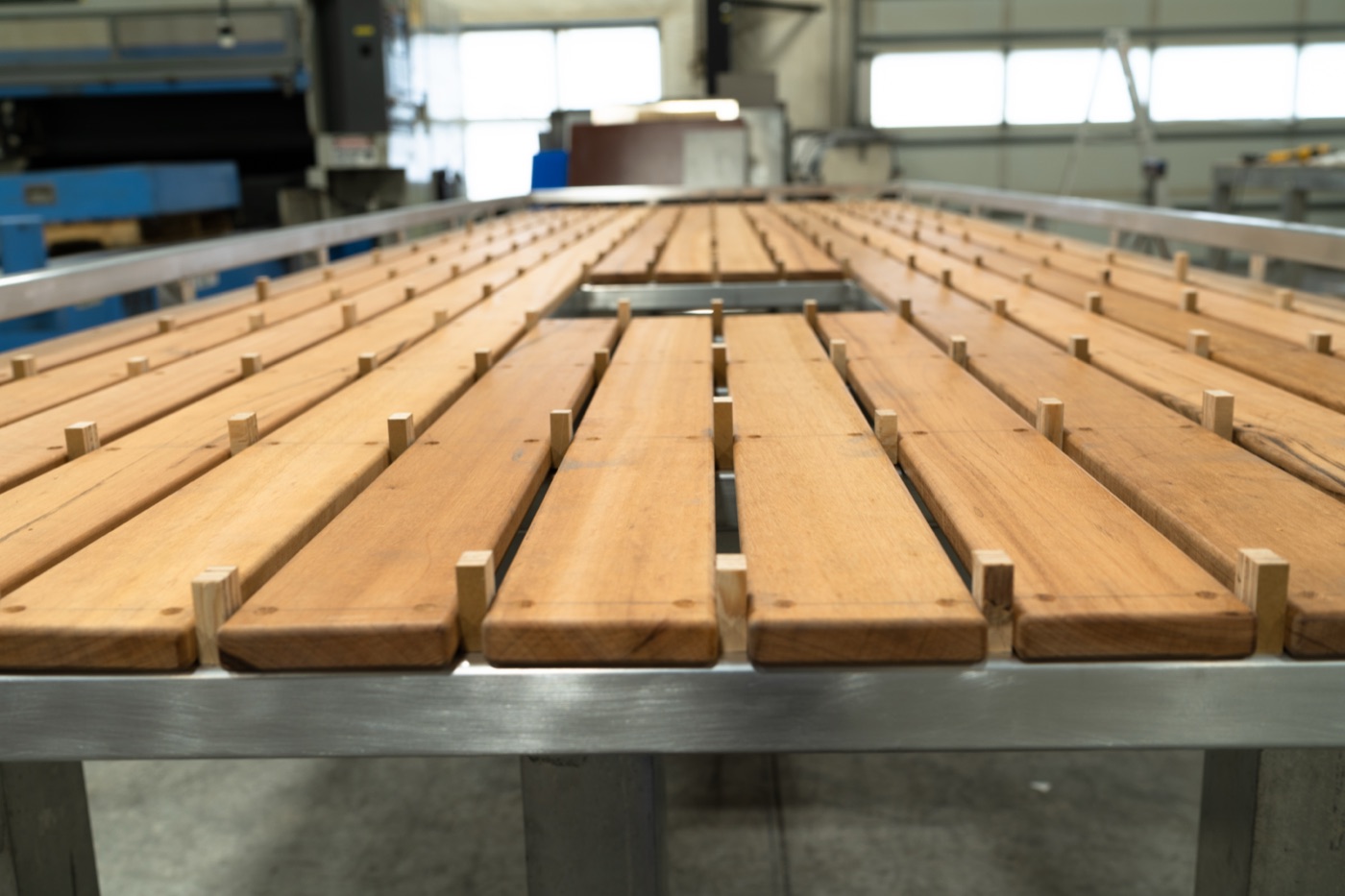
Tigerwood deck finished. Solar goes on next.
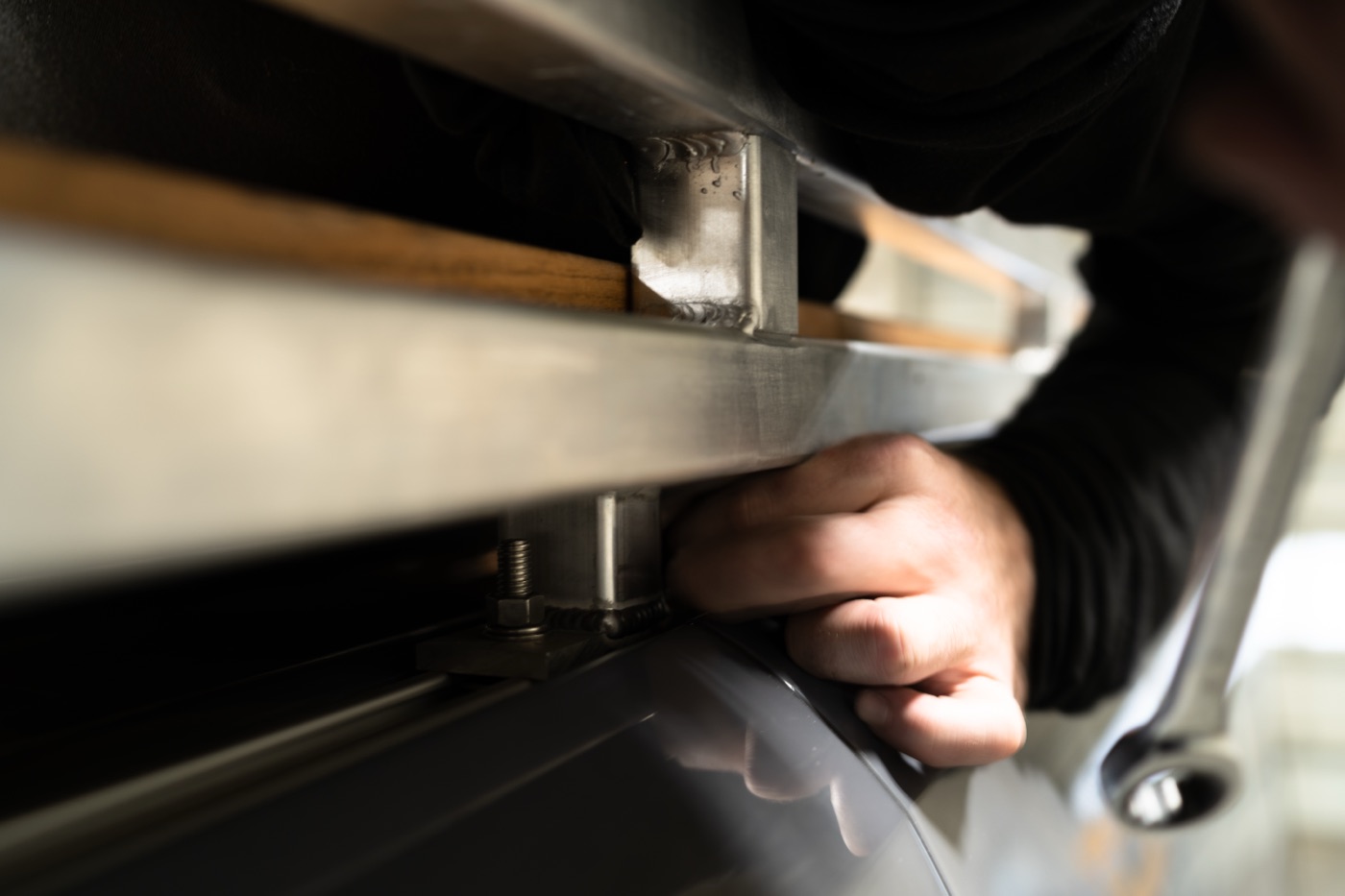
The finished rack lifts onto the Sprinter and bolts into the factory anchor points, so the load runs straight into the chassis.
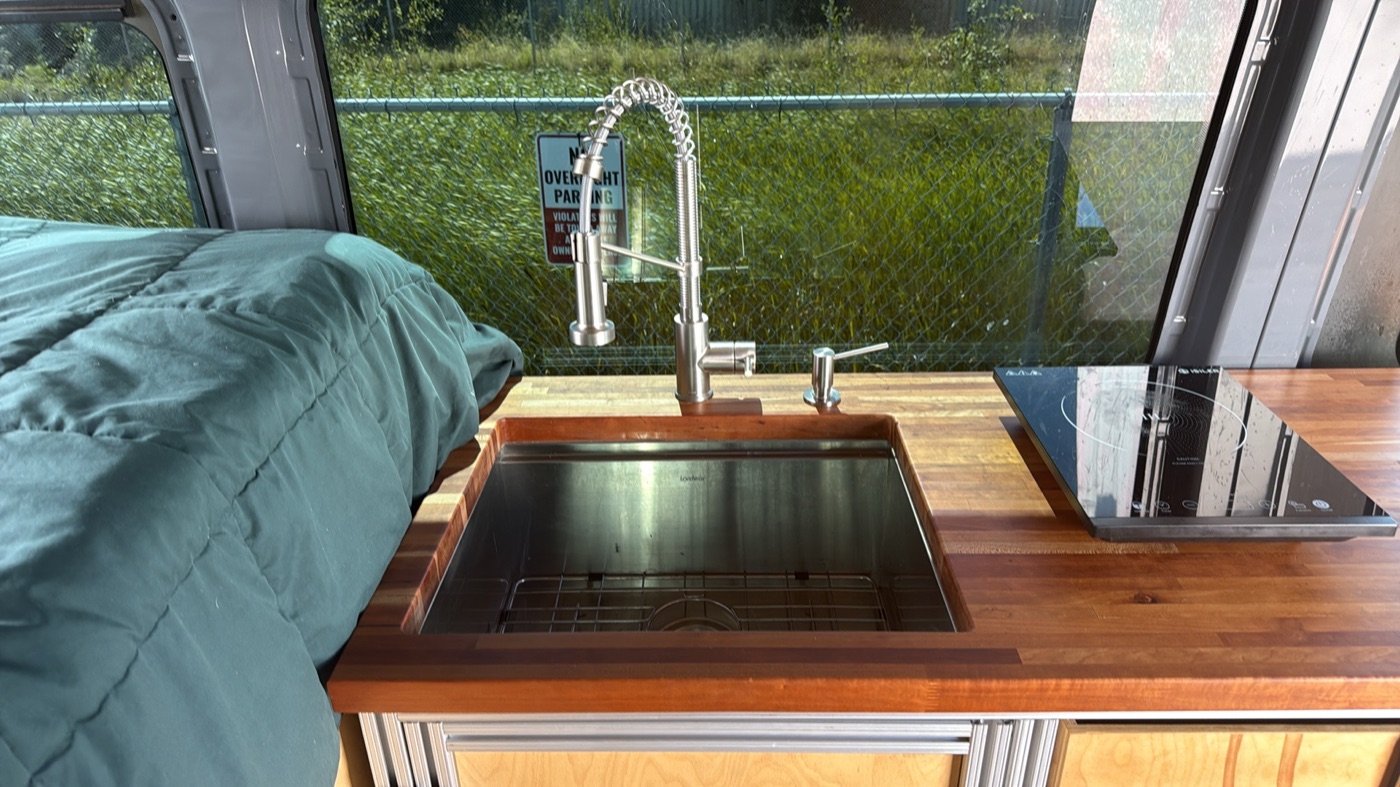
The interior frame is modular aluminum extrusion — the same stuff used on factory floors. A cherry butcher-block countertop runs the galley, with an undermount sink and a flush induction cooktop dropped in.
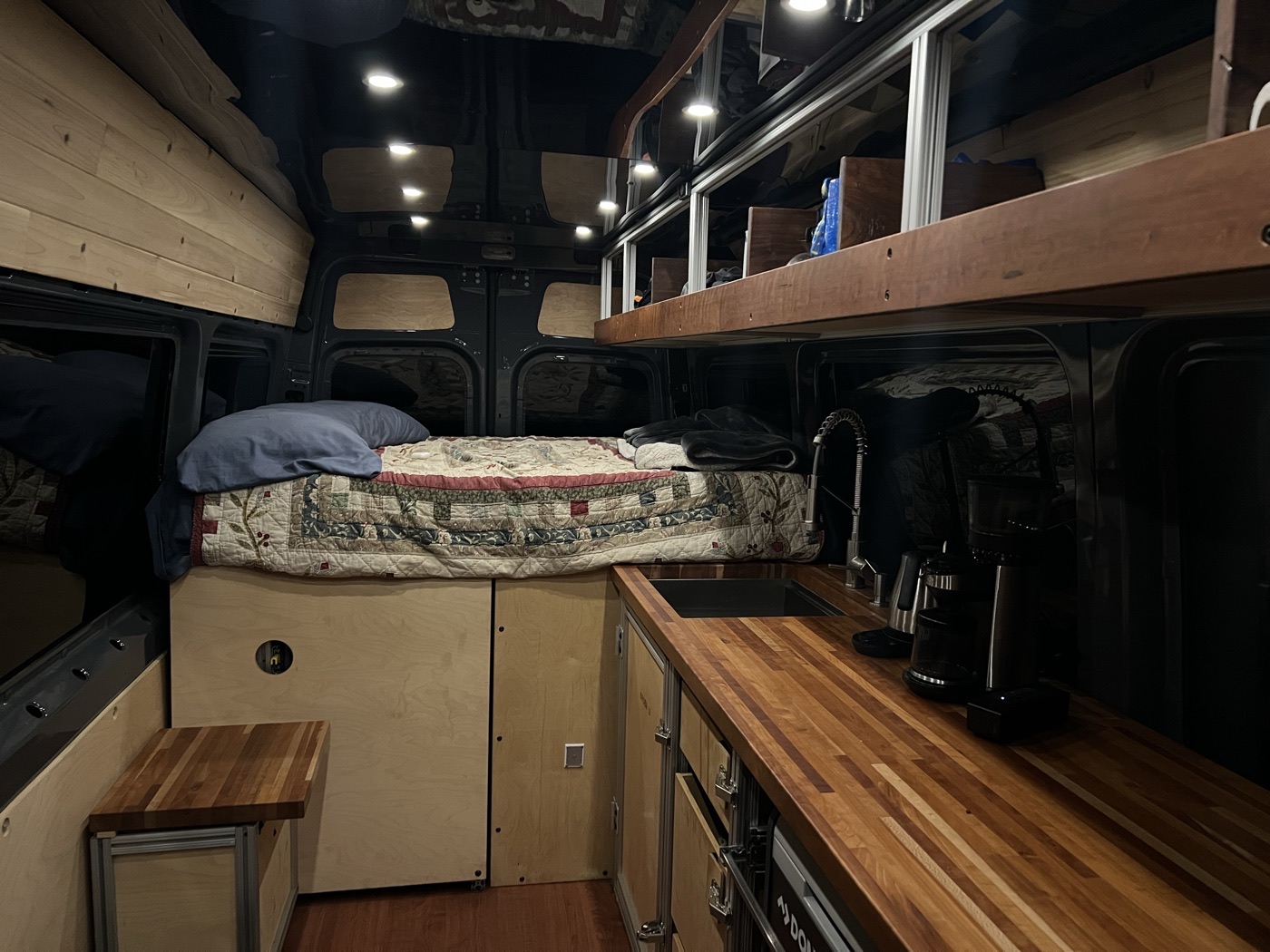
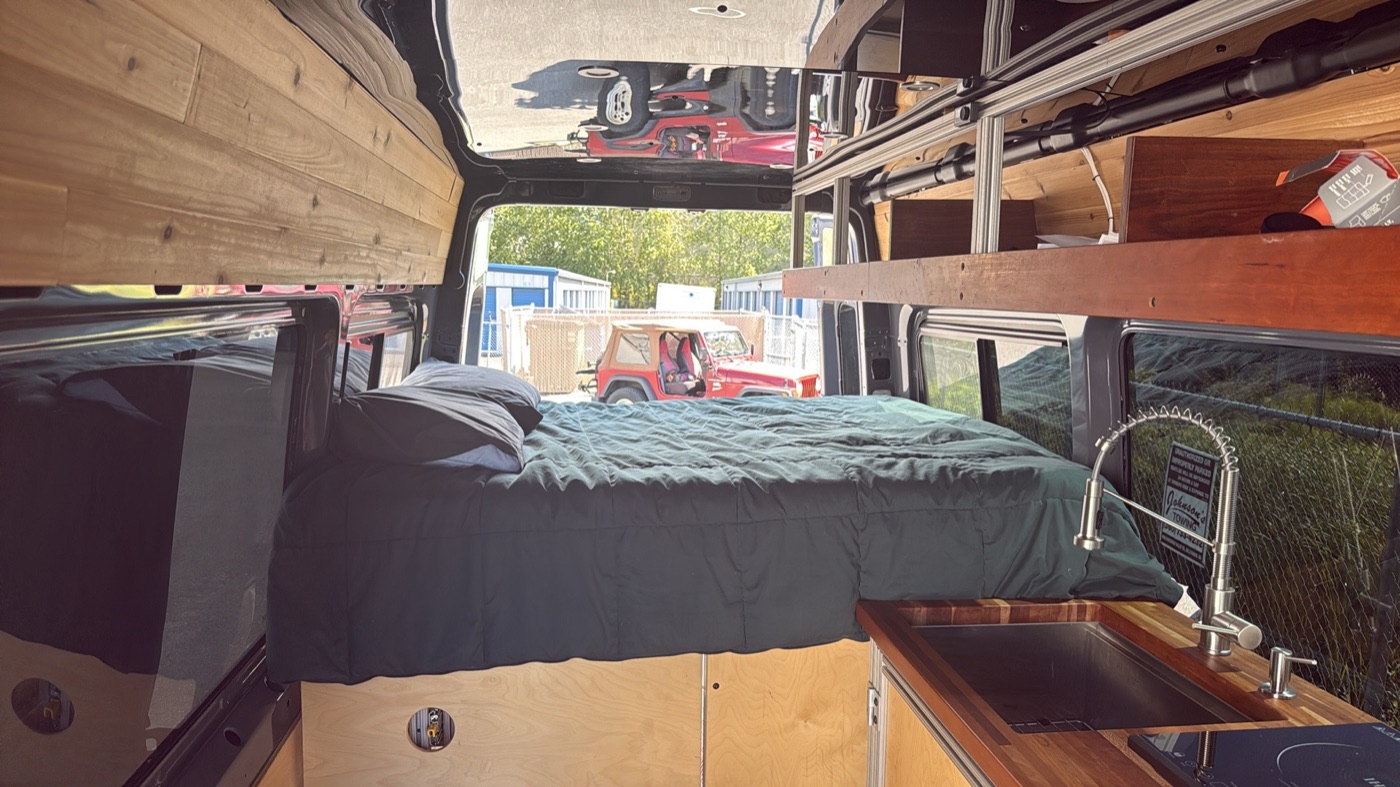 Sleeping platform
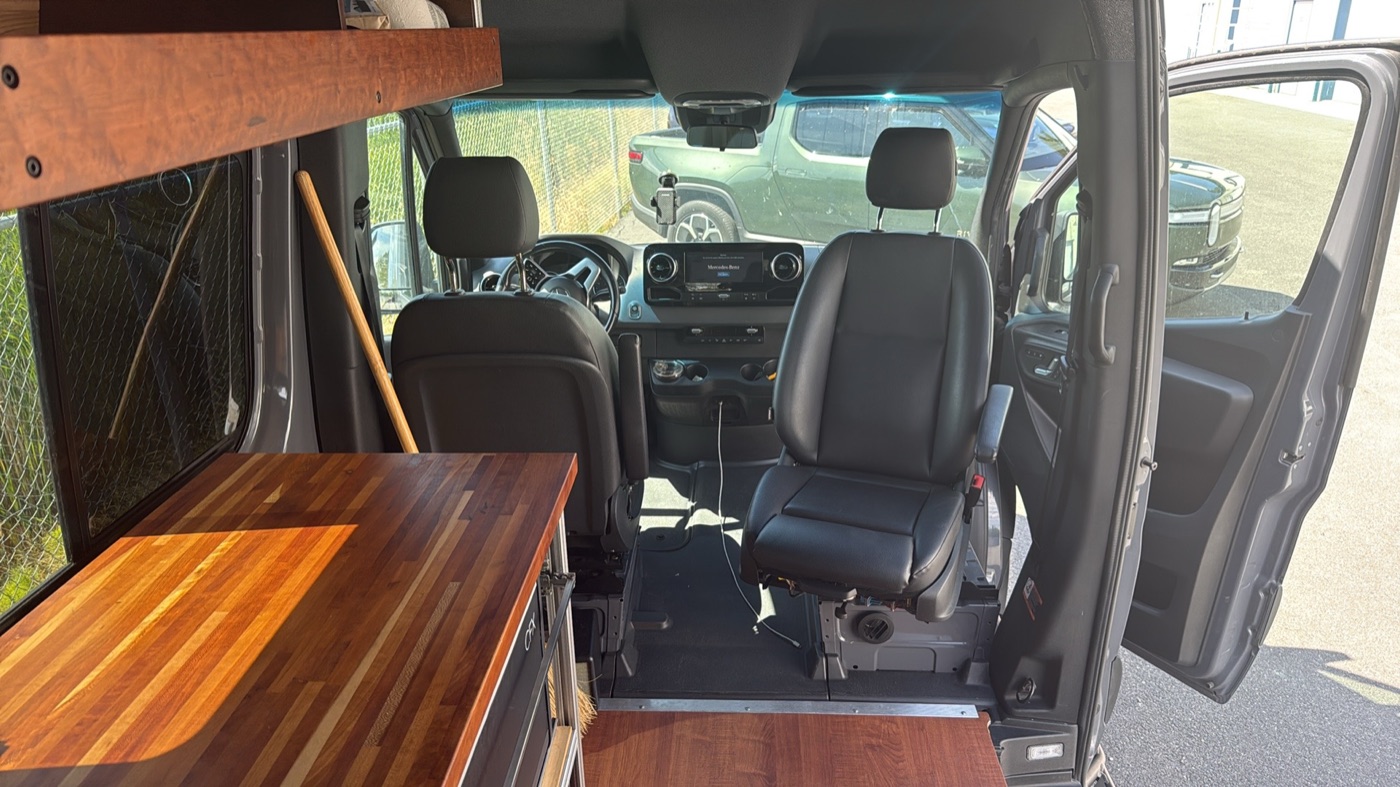 Cab pass-through
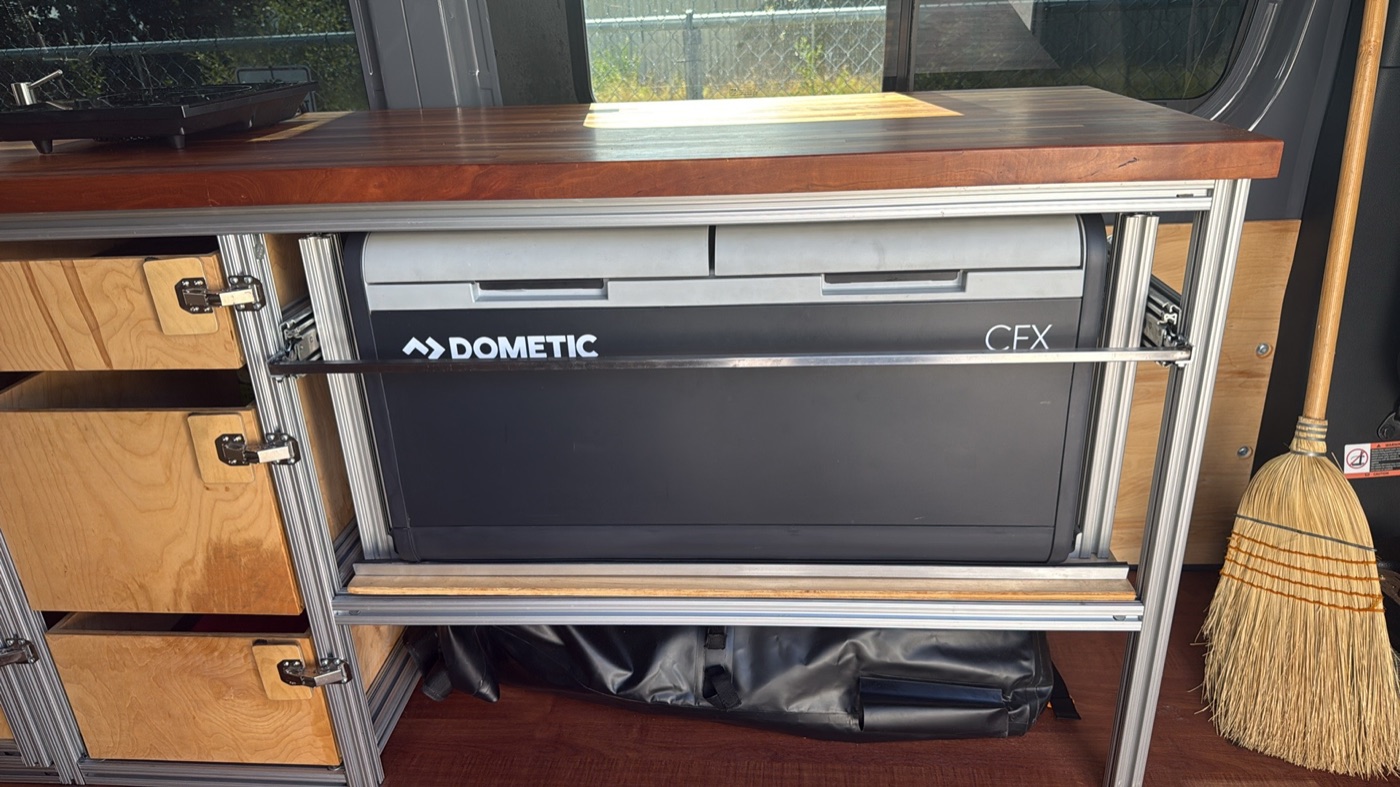 Dometic CFX fridge-freezer
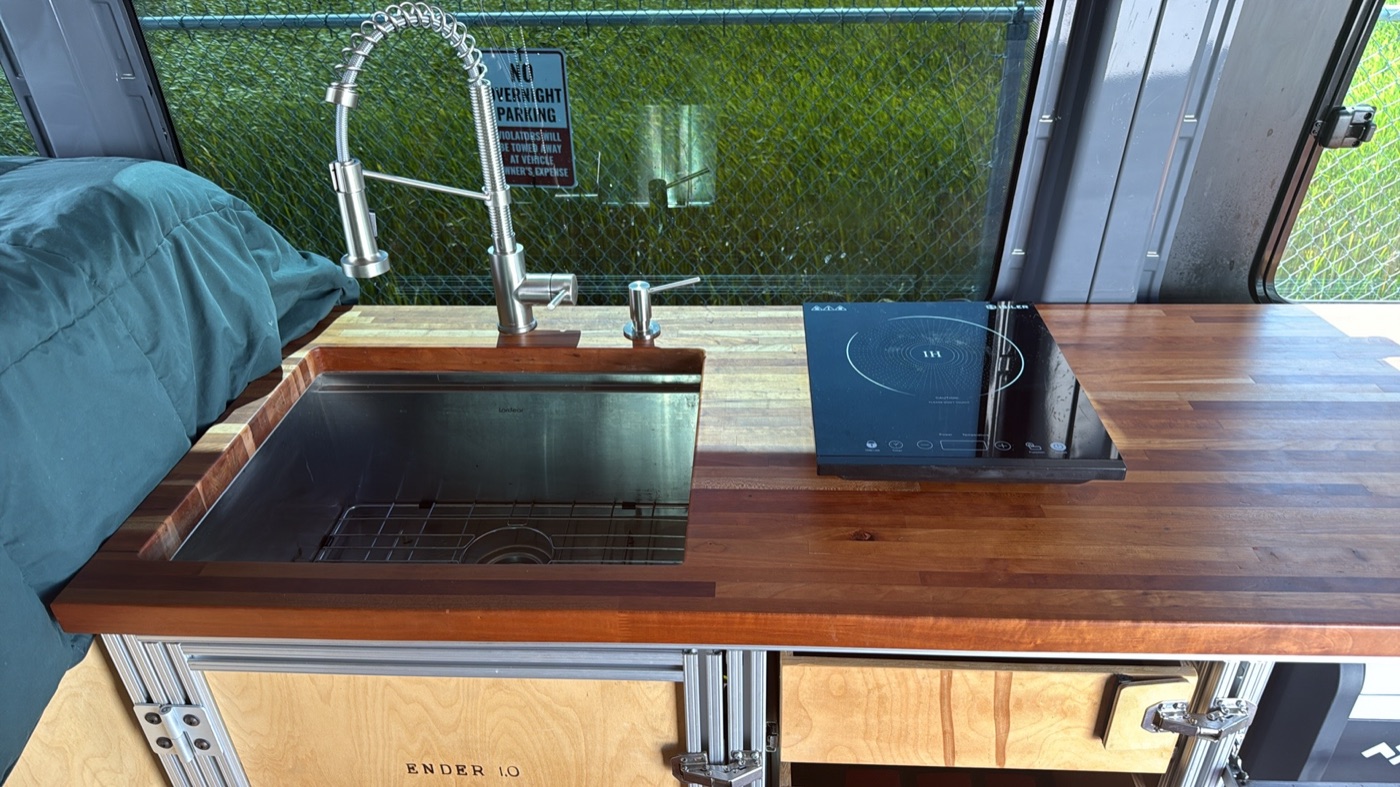 Galley kitchen
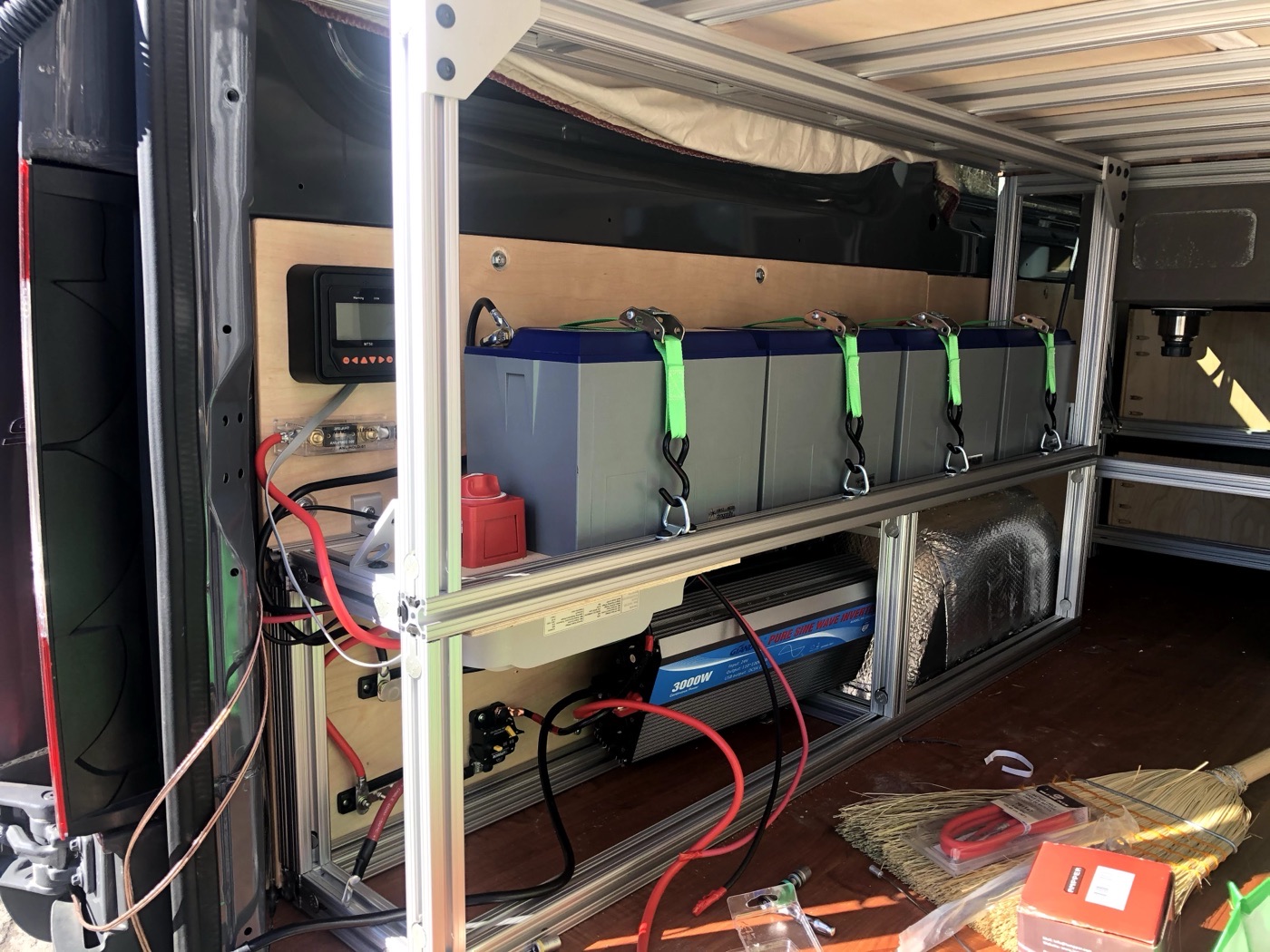
Solar's only part of it. Ender carries a deep-cycle battery bank, fresh water, an outdoor shower, and both cellular and satellite internet — enough to live and work off-grid for weeks at a time.
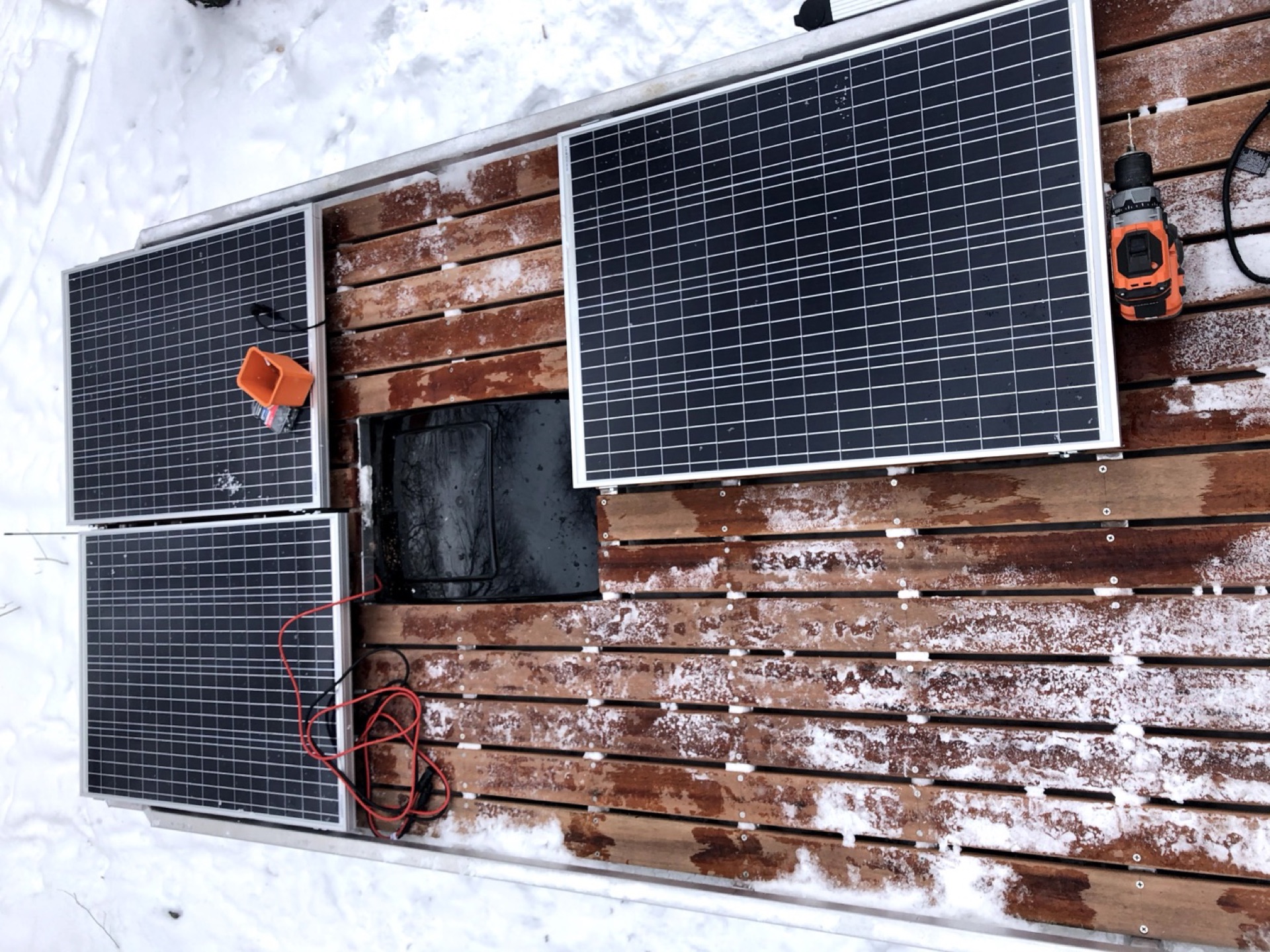
Four panels mounted directly to the Tigerwood deck.
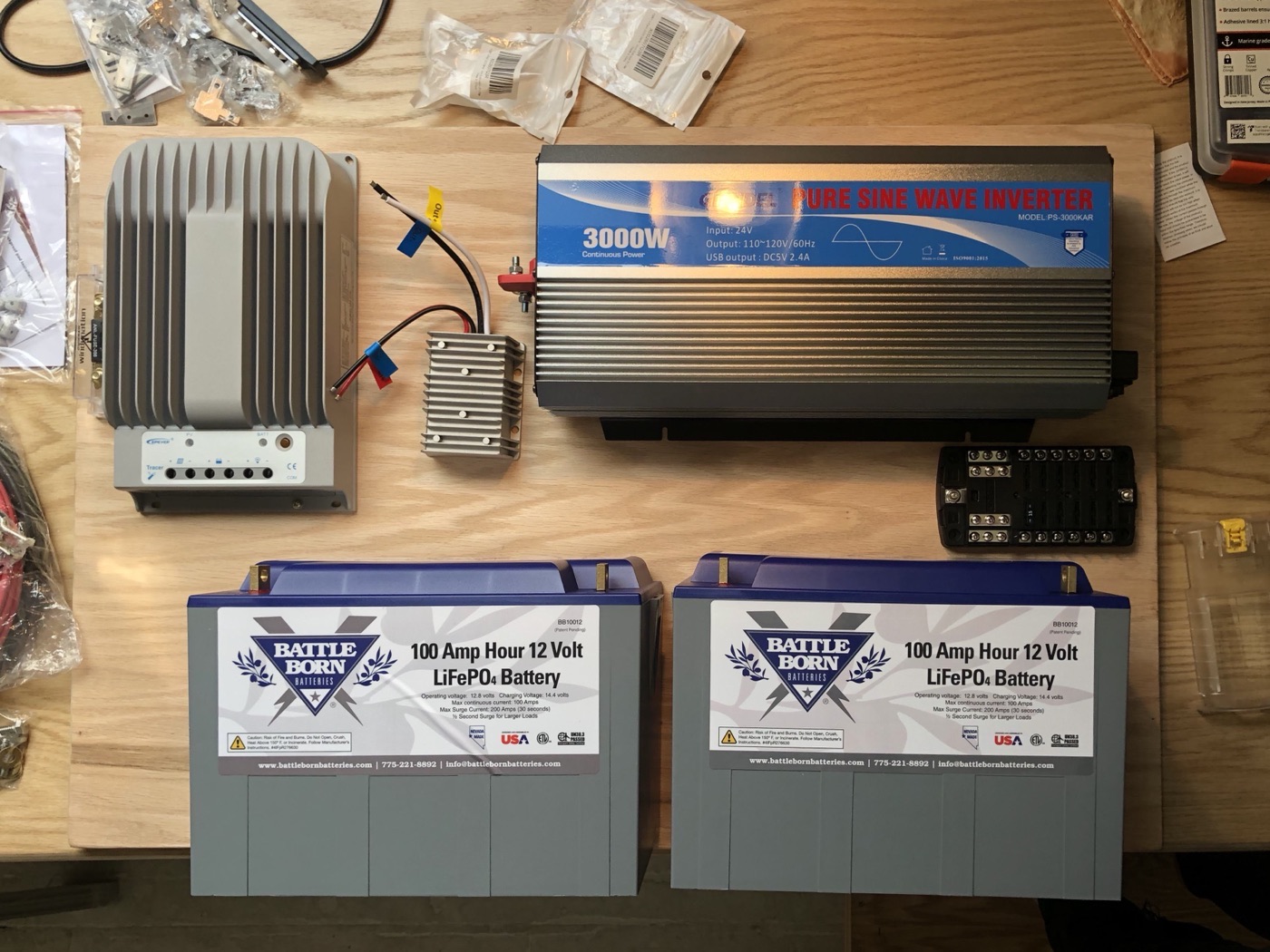
Battle Born LiFePO4 batteries. 3000W inverter. MPPT charge controller. Before it all went behind the wall.
Cellular & satellite
internet. Outdoor
shower. No fixed address.